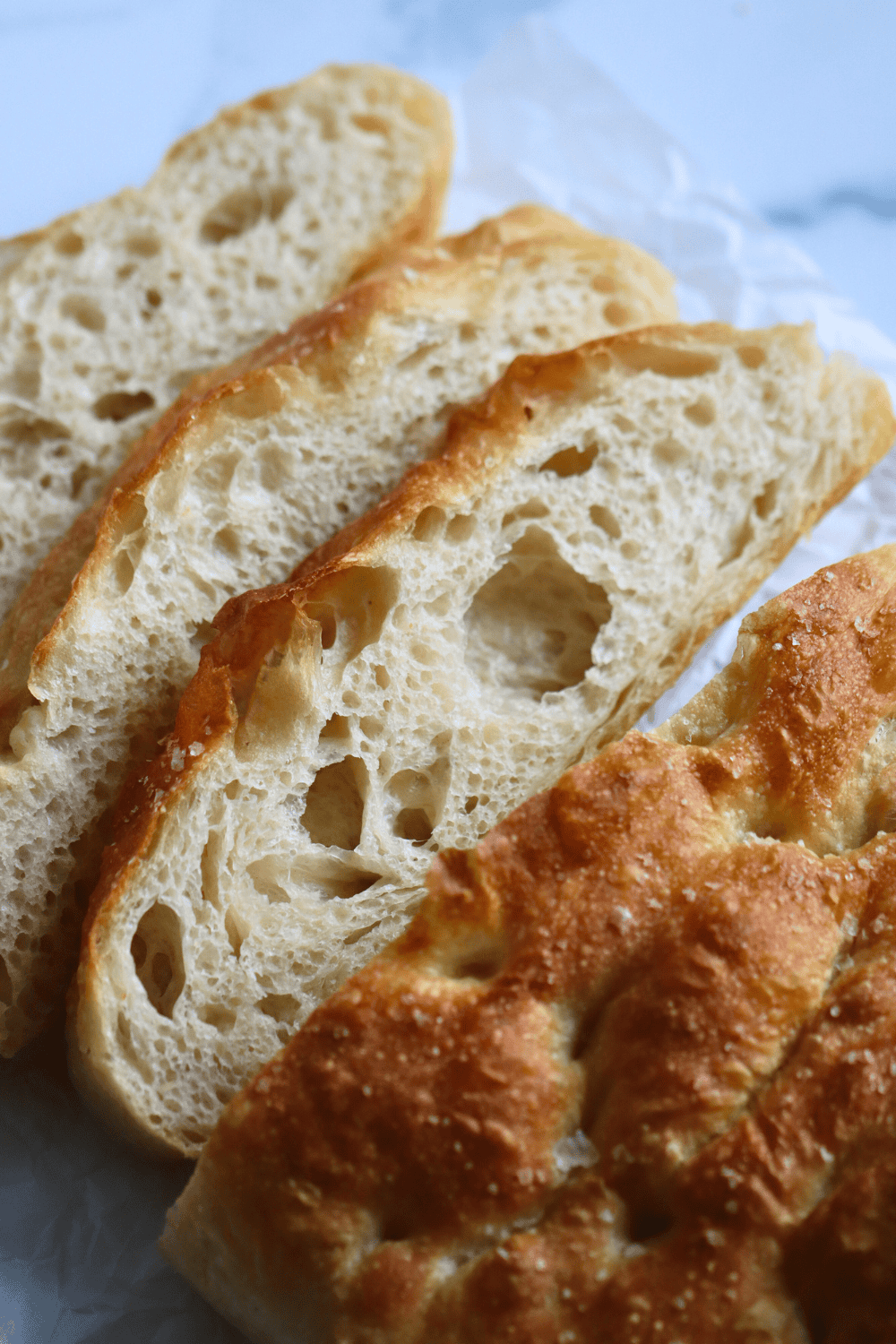

If you maintain a sourdough starter, you know the frustration of regular feedings that produce excess discard. Rather than toss it, transform that discard into focaccia–a pillowy, dimpled flatbread that rivals bakery versions. This recipe solves the waste problem while delivering impressive results with minimal effort, making it perfect for weekend bakers looking to elevate their starter routine.
How to Make Sourdough Discard Focaccia
This focaccia uses active sourdough discard to create depth of flavor without requiring a long fermentation. The dough comes together quickly and develops its signature texture through a simple overnight rise and high-heat bake.
Ingredients
- 1 cup active sourdough discard (fed 4-8 hours prior, bubbly and at peak)
- 1.5 cups warm water
- 3.5 cups bread flour or all-purpose flour
- 2 teaspoons salt
- 3 tablespoons extra-virgin olive oil, divided
- Coarse sea salt, dried rosemary, and garlic for topping
Method
Combine wet ingredients
Pour your active sourdough discard and warm water into a large mixing bowl. Stir together until partially combined–a few streaks of discard remaining is fine. Let this mixture rest for 30 minutes at room temperature. This autolyse period allows the flour to hydrate evenly and develops gluten structure naturally.
Mix in flour and salt
Add flour and salt to the bowl. Using a wooden spoon or your hands, mix until all dry ingredients are incorporated and a shaggy dough forms. The dough should feel slightly sticky but hold together. Knead for 5-10 minutes by hand or 5 minutes in a stand mixer until the dough becomes smoother and more elastic.
First rise with oil
Transfer dough to a clean bowl lightly coated with olive oil. Cover with a damp towel or plastic wrap. Let rise at room temperature for 2-4 hours, or until roughly doubled in size. The warm discard accelerates fermentation compared to traditional sourdough, so watch for visual cues rather than relying solely on time.
Prepare the pan
Drizzle 1.5 tablespoons of olive oil into a 9×13-inch sheet pan, coating the bottom evenly. This oil will crisp the bottom crust and flavor the bread. Ensure oil reaches all corners and edges of the pan for even browning.
Shape and dimple
Transfer risen dough to the oiled pan. Using oiled fingers, gently stretch and press the dough to fill the pan evenly, working from the center outward. Create the signature dimples by pressing your fingertips (or knuckles) all over the surface, spacing them about 1-2 inches apart. Don’t deflate the dough completely; the dimples should be impressions, not holes.
Cold overnight rise
Drizzle the remaining 1.5 tablespoons of olive oil over the dimpled dough. Cover loosely with plastic wrap and refrigerate for 8-24 hours. This cold fermentation develops flavor complexity and makes the dough easier to handle. The dough will rise slowly in the fridge, and you may see it puff slightly.
Preheat and finish topping
Remove focaccia from the refrigerator 30 minutes before baking. Meanwhile, preheat your oven to 450 degrees Fahrenheit. Sprinkle the top generously with coarse sea salt, dried rosemary, minced garlic, or other toppings of your choice. The contrast of crispy salt against the soft bread is essential to authentic focaccia.
Bake until golden
Bake for 20-25 minutes until the top is deep golden brown and the edges are crispy. The bottom should sound hollow when tapped. Remove from the oven and let cool in the pan for 10 minutes before slicing. Focaccia is best served warm, torn into pieces for sharing.
- If your sourdough discard is cold from the fridge, let it sit at room temperature for 1-2 hours before mixing to ensure optimal fermentation speed.
- Don’t skip the overnight cold rise–it dramatically improves flavor and gives you the flexibility to bake on your schedule.
- For extra richness, finish the warm focaccia with a drizzle of flavorful finishing oil and fresh rosemary sprigs immediately after baking.
What to Look For in Focaccia Baking Equipment
- Sheet Pan Quality: Heavy-duty, light-colored sheet pans conduct heat evenly and prevent over-browning of bottoms. Look for pans with slight edges to contain oil without pooling. Professional half-sheet pans are ideal for focaccia.
- Mixing Bowl Size: A large, sturdy bowl (at least 3-quart capacity) gives dough room to rise without overflowing. Opt for bowls with a wide diameter for easier hand-mixing and better ergonomics.
- Thermometer Accuracy: An instant-read thermometer helps confirm your oven temperature and ensures consistent baking. Oven temperatures vary; verifying actual heat prevents underbaking or burning.
- Olive Oil Type: Extra-virgin olive oil adds authentic Mediterranean flavor to focaccia. Avoid refined oils for topping; reserve those for cooking. A quality oil makes a measurable difference in final taste.
Final Recommendation
Sourdough discard focaccia is a game-changing recipe that solves the problem of excess starter while delivering bakery-quality bread at home. The overnight cold fermentation develops authentic sourdough flavor without requiring the 12-24 hour commitment of traditional loaves. With just five basic ingredients and one quality sheet pan, you’ll produce focaccia that impresses family and friends while honoring your sourdough culture.
Invest in a heavy-duty sheet pan and accurate oven thermometer, and your focaccia journey becomes nearly foolproof. Each bake teaches you something new about fermentation and heat management, making you a better baker overall. Within a few attempts, you’ll develop the intuition to adjust for your kitchen’s unique conditions and produce consistently excellent results.
Frequently Asked Questions
Can I use sourdough discard that just came out of the fridge?
Yes, but allow it to sit at room temperature for 1-2 hours first. Cold discard ferments slowly, which can throw off your timing. Bringing it to room temperature jumpstarts fermentation and ensures your dough rises as expected.
What if I don’t have a sheet pan?
You can use a cast iron skillet or round cake pan, though you’ll need to adjust the shape accordingly. Cast iron works beautifully for focaccia and creates an extra-crispy bottom. Just ensure your pan is at least 9 inches in diameter.
How long does focaccia keep after baking?
Focaccia stays fresh for 2-3 days in an airtight container at room temperature. You can freeze baked focaccia for up to a month; reheat in a 350-degree oven for 10 minutes to restore crispness.
Can I skip the overnight cold rise?
While possible, the overnight rest develops superior flavor and is worth the wait. If you’re short on time, allow 4-6 hours at room temperature instead, though the bread won’t have the same complexity.
What toppings work best for focaccia?
Classic options include coarse sea salt, rosemary, garlic, and onions. Experiment with olives, sun-dried tomatoes, or even cheese. Apply toppings just before baking so salt doesn’t draw out moisture and herbs don’t scorch.
As an Amazon Associate, Build & Bloom earns from qualifying purchases. We only recommend products we genuinely think are useful. Prices and availability vary; check Amazon for the latest.
Leave a Reply