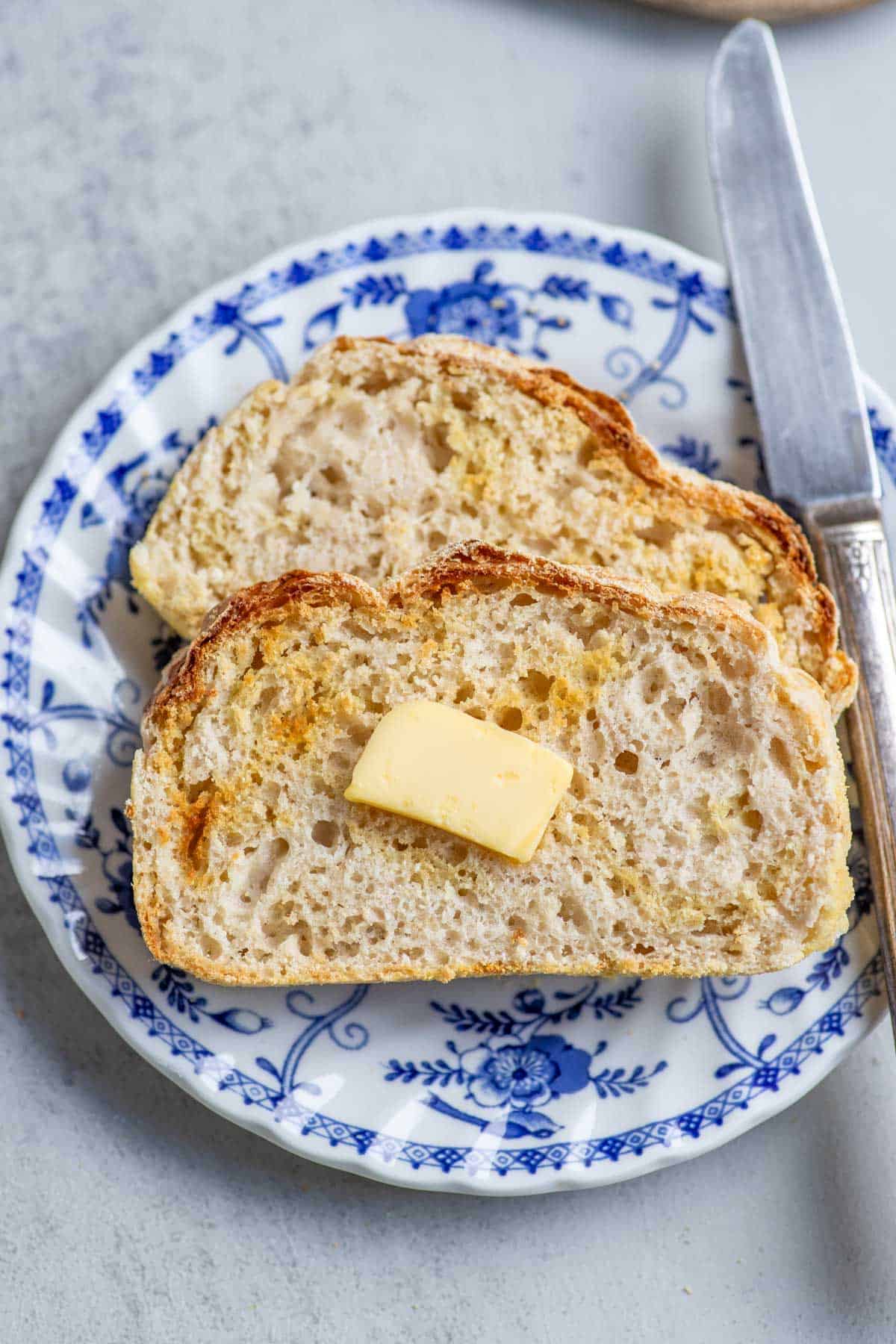

English muffin loaves have that signature tender, open crumb that’s perfect for toasting and spreading with butter or jam. When you bake one with sourdough starter, you get all that signature tang and complex flavor without needing commercial yeast or waiting for extensive bulk fermentation. This hybrid approach gives you the best of both baking worlds: sourdough character with English muffin texture.
How to Make Sourdough English Muffin Loaf
This recipe yields a single loaf with a distinctive tender crumb and subtle sourness. The dough is simpler than traditional sourdough but delivers impressive flavor from your active starter.
Ingredients
- 1 cup active sourdough starter (fed and bubbly)
- 1 1/4 cups warm water
- 3 cups all-purpose flour
- 1 1/2 teaspoons salt
- 1/4 teaspoon instant yeast (optional, speeds fermentation)
Method
Mix the dough
Combine your active starter, warm water, and flour in a large mixing bowl, stirring until no dry flour remains. Let this mixture rest for 30 minutes to allow the flour to fully hydrate. This autolyse period develops gluten naturally without additional mixing.
Incorporate salt
After resting, add salt to the dough and mix thoroughly until completely incorporated. If using instant yeast, add it with the salt. Mix for several minutes until the dough becomes smoother and slightly elastic, using either a wooden spoon or your hands.
First bulk fermentation
Transfer dough to a lightly oiled container and cover with a damp towel or plastic wrap. Let it rise at room temperature for 4-6 hours, performing 3-4 stretch-and-fold motions every 30 minutes during the first 2 hours. The dough should increase in volume by about 50-75 percent and show visible bubbles.
Shape the loaf
Turn the dough onto a lightly floured surface and gently pre-shape it into a round. After a 20-minute rest, shape it into a tight round or oval that fits your loaf pan. The surface should be taut to support oven spring and create that distinctive English muffin texture.
Final proof
Place the shaped dough seam-side up in a floured banneton basket or seam-side down in a parchment-lined loaf pan. Cover loosely and allow to proof for 2-4 hours at room temperature until the dough springs back slowly when poked. Alternatively, refrigerate overnight for easier scoring and deeper flavor.
Prepare for baking
Preheat your oven to 450 degrees Fahrenheit about 30 minutes before baking. If using a Dutch oven or covered baking vessel, place it inside to preheat. If baking free-form, place a pan of water on the bottom rack to create steam, which is essential for achieving the characteristic English muffin open crumb.
Score and bake
Carefully turn the dough onto parchment paper if needed. Score the top with a sharp blade, making 2-3 confident slashes at a 30-degree angle. Bake covered for 20 minutes to trap steam, then uncover and bake 25-30 minutes more until deeply golden brown and the loaf sounds hollow when tapped on the bottom.
Cool completely
Transfer the finished loaf to a wire rack and allow it to cool completely, about 1-2 hours, before slicing. This cooling period allows the interior crumb to set properly. Once cooled, slice and toast to enjoy the characteristically tender English muffin texture with sourdough depth.
- Keep your sourdough starter fed and active for at least 4-8 hours before baking; it should be doubled and bubbly at peak, with a mild vinegary smell indicating ready fermentation.
- The English muffin texture comes partly from steam; don’t skip the Dutch oven or water pan, and avoid opening the oven during the first 20 minutes.
- If your kitchen is cool, extend fermentation times by 1-2 hours or proof in an oven with the light on to maintain consistent 75-78 degree temperatures.
What to Look For in Sourdough Baking Equipment
- Loaf Pan Quality: Ceramic or cast iron pans distribute heat evenly and produce superior crust development compared to thin aluminum. Look for 9×5-inch standard size with dark interior coating for better browning. Weight and heat retention matter significantly for English muffin loaves.
- Dutch Oven or Covered Baker: Heavy cast iron or enameled steel vessels trap steam during the critical first 20 minutes of baking, creating the open crumb structure essential to English muffin loaves. Ensure the lid fits snugly and the vessel is oven-safe to at least 500 degrees.
- Dough Rising Container: Clear glass or food-grade plastic bowls with graduated measurements help you track fermentation progress visually. Choose containers with lids or that accommodate plastic wrap, and ensure they’re large enough for dough to increase 75 percent volume.
- Scoring and Handling Tools: A sharp lame, bread knife, or curved scoring tool is essential for clean slashes that promote proper oven spring. Dough scrapers and bench cutters help shape without sticky flour buildup. Banneton baskets (proofing bowls) make handling easier and contribute to shape consistency.
Le Creuset Enameled Cast Iron Dutch Oven 5.5 Quart
Best for: Serious bread bakers who want professional results
The gold standard for artisan bread baking, this heavy-duty Dutch oven traps steam perfectly during the critical first 20 minutes of baking when your English muffin loaf develops its characteristic open crumb. The 5.5-quart capacity accommodates larger loaves with room to spare. The tight-fitting lid and superior heat retention create exceptional crust color and texture. While premium-priced, this heirloom-quality piece will outlast dozens of baking projects and deliver consistent results year after year.
Check Current Price on Amazon →Amazon Basics Enameled Cast Iron Dutch Oven 5 Quart
Best for: Budget-conscious home bakers starting their sourdough journey
Delivers nearly identical baking performance to premium brands at a fraction of the cost. This 5-quart Dutch oven provides the steam environment needed for excellent sourdough English muffin loaves. The matte black enamel interior withstands high heat, and the snug-fitting lid creates the necessary seal. Perfect for proving your bread-baking commitment before investing in premium equipment. Many home bakers report using this for hundreds of loaves with no performance degradation.
Check Current Price on Amazon →Pyrex Glass Mixing Bowls Set with Lids 8-Piece
Best for: Novice bakers who want to monitor fermentation visually
Clear glass bowls let you watch your sourdough English muffin dough rise through each fermentation stage, building confidence and understanding of the process. This 8-piece set includes multiple sizes for mixing, bulk fermentation, and ingredient storage. The airtight plastic lids seal tightly to prevent drying while proving. Microwave and dishwasher safe, these bowls transition seamlessly from dough fermentation to everyday kitchen use. The transparent design removes guesswork from fermentation readiness.
Check Current Price on Amazon →Emile Henry Bread Cloche Ceramic Baker
Best for: Bakers seeking beautiful design alongside performance
This artisan ceramic bread baker combines functionality with stunning aesthetic appeal. The cloche design creates a perfect steam environment while the ceramic material heats gently and evenly. Unlike cast iron, it won’t rust and requires no seasoning. The natural clay construction breathes slightly during baking, producing exceptional crust texture on English muffin loaves. Available in multiple colors to complement kitchen decor, this piece doubles as a serving vessel and works beautifully on the table.
Check Current Price on Amazon →Final Recommendation
Making a sourdough English muffin loaf at home is entirely achievable with basic equipment and attention to fermentation timing. The key is choosing one quality piece — a Dutch oven or covered bread baker — that traps steam effectively during baking. Everything else supports this central function. Start with the mixing bowl set to monitor progress visually, grab the essential scoring and shaping tools, and you’re ready to bake with confidence. Most home bakers find that their first loaf exceeds expectations because the recipe is forgiving and the science is straightforward.
Your investment in proper equipment pays dividends across every future baking project. A good Dutch oven, for instance, works equally well for French bread, focaccia, sandwich loaves, and artisan rounds. The dough scrapers, proofing basket, and scoring tools are sourdough essentials that professionals use daily. Begin with budget-friendly basics from the list, master the technique, then upgrade to premium pieces as your skills develop. Within weeks, you’ll be producing bakery-quality sourdough English muffin loaves that justify every penny spent on proper tools.
Frequently Asked Questions
What’s the difference between a regular loaf and an English muffin loaf?
English muffin loaves have a distinctively tender, open crumb with irregular holes, similar to the nooks and crannies of toasted English muffins. Regular sandwich loaves have tighter, more uniform crumb structure. The English muffin loaf shines when sliced and toasted, with the open crumb allowing butter and jam to soak in beautifully.
Can I make this without a Dutch oven?
Yes, but you’ll need to create steam another way. Place a deep pan of boiling water on the oven’s bottom rack and mist the oven walls with water several times during the first 15 minutes. The results won’t match Dutch oven baking, as steam escape is harder to control, but you’ll still achieve decent results with patience and technique.
How do I know when my sourdough starter is ready to use?
Your starter should be bubbly, have doubled in size since feeding, and smell pleasantly sour (not like acetone or gym socks). Perform the float test: drop a small spoonful into water; if it floats, it’s ready. Ideally, bake within 2-4 hours of peak fermentation for best flavor and rise.
Why is steam so important for sourdough bread?
Steam keeps the dough surface moist during the first 20 minutes of baking, allowing maximum oven spring and crust development. Without steam, the crust hardens too quickly, trapping gases inside and preventing the characteristic open crumb structure. Once the crust sets, the oven’s dry heat creates the final browning and texture.
Can I refrigerate the dough overnight instead of bulk fermenting?
Absolutely. After shaping, place the dough in your proofing basket or loaf pan, cover tightly, and refrigerate for 8-16 hours. Cold fermentation actually deepens flavor as organic acids develop slowly. Remove from refrigeration 30-45 minutes before baking to bring to room temperature, then score and bake as directed.
As an Amazon Associate, Build & Bloom earns from qualifying purchases. We only recommend products we genuinely think are useful. Prices and availability vary; check Amazon for the latest.
Leave a Reply