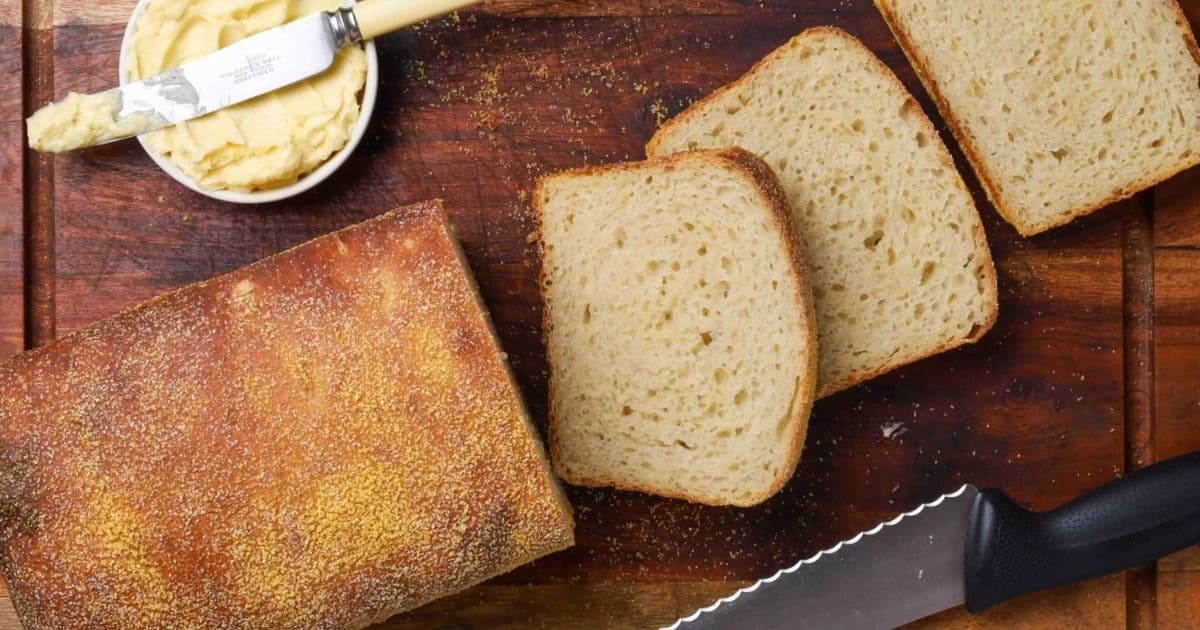

If you’ve tasted those small, chewy English muffins and wished you could scale that texture up into a full loaf, you’re onto something brilliant. A sourdough English muffin loaf captures that same tight, nook-and-cranny structure with deep sourdough tang, and it’s easier to make than you’d think. This method uses your active starter, a long fermentation, and one key technique to get those characteristic holes and tender crumb without special equipment.
How to Make Sourdough English Muffin Loaf
This recipe produces one rustic loaf with the compact texture of an English muffin but the flavor depth of traditional sourdough. Plan for 24 to 48 hours of total time, mostly hands-off.
Ingredients
- 1 cup active sourdough starter (fed 4-8 hours prior, bubbly and at peak)
- 1.5 cups warm water (around 80-85 degrees Fahrenheit)
- 3.5 cups all-purpose or bread flour
- 1.5 teaspoons salt
- Optional: 1/2 teaspoon sugar or honey to activate bulk fermentation
Method
Mix dough and autolyse
Combine your active starter, water, and flour in a mixing bowl. Stir until all flour is hydrated and no dry pockets remain. Let rest for 30 to 60 minutes uncovered at room temperature. This resting period, called autolyse, helps gluten develop naturally and improves the dough’s extensibility.
Incorporate salt and develop gluten
Sprinkle salt over the rested dough and fold it in using stretch-and-fold motions every 30 minutes for 2 to 3 hours. Wet your hand, grab one side of the dough, stretch it up and fold it over the center, rotate the bowl, and repeat. This builds strength without aggressive kneading and creates the characteristic tight crumb.
Bulk fermentation
Leave the dough undisturbed in its bowl for 4 to 8 hours at room temperature, or until it increases by 50 to 75 percent in volume. You should see visible bubbles and smell a pleasant tangy aroma. The timing depends on kitchen temperature; warmer kitchens ferment faster.
Pre-shape and bench rest
Turn the dough onto a lightly floured surface and gently pre-shape it into a round. Let it rest for 20 to 30 minutes. This relaxes the gluten and makes final shaping easier without degassing the dough too much.
Final shape with tension
Flip the dough seam-side down. Using cupped hands, drag the dough toward you in rolling motions to build surface tension. This creates the tight exterior that traps steam and creates those signature nooks and crannies. Shape into a round or oval, then place seam-side up in a proofing basket.
Cold retard overnight
Cover your shaped dough and refrigerate for 12 to 24 hours. Cold fermentation develops flavor and makes scoring easier. The cold dough also proofs slowly, giving you flexibility in baking schedule and improving the final crumb structure.
Score and bake with steam
Preheat your oven to 475 degrees Fahrenheit with a baking vessel inside for 45 minutes. Remove the cold dough, flip it seam-side down onto parchment paper, and score the top with a sharp blade using confident, swift cuts. Transfer to the hot vessel, add steam (boil water in a second pan inside), and bake 20 minutes covered. Uncover and bake another 25 to 30 minutes until deep golden brown.
Cool completely before slicing
Remove the loaf and cool on a wire rack for at least 1 to 2 hours before cutting. The crumb continues to set during cooling. Slicing too early leads to gummy texture; patience here is essential for that perfect English muffin chew.
- Keep your sourdough starter at peak strength by feeding it with equal parts flour and water by weight, 4 to 8 hours before using. A bubbly, doubled starter ferments faster and produces better rise.
- If your dough is very sticky after bulk fermentation, chill it for 30 minutes before shaping. Cold dough is easier to handle and produces better surface tension.
- The English muffin crumb comes from that tight shaping and the steam in the oven. Don’t skip the scoring or the steam step; both are critical to achieving those characteristic holes.
Essential Tools for Sourdough English Muffin Loaf
- Dutch Oven or Covered Baking Vessel: Traps steam around your loaf during the initial bake, creating the crispy crust and open crumb structure sourdough requires. Look for heavy-duty construction that retains heat evenly.
- Proofing Basket or Banneton: Supports your shaped dough during the final cold fermentation, preventing it from spreading. Prevents direct contact with the fridge and makes scoring easier when you flip it onto your baking surface.
- Lame or Scoring Knife: A sharp blade used to score the loaf surface before baking. Scoring controls where the loaf expands and creates those artisanal-looking cuts that define the final presentation.
- Digital Kitchen Scale: Ensures precise ingredient measurements by weight rather than volume. Sourdough baking is chemistry; grams guarantee consistency and reproducibility across every bake.
Le Creuset Enameled Cast Iron Dutch Oven, 5.5-Quart
Best for: Serious home bakers seeking premium durability
The gold standard for sourdough baking. Le Creuset’s 5.5-quart Dutch oven distributes heat evenly and retains temperature perfectly, producing consistent steam and exceptional crust. The enameled interior prevents rust and the heavy lid traps moisture reliably. Built to last decades with proper care. This is the loaf-baking workhorse that professionals and dedicated hobbyists choose.
Check Current Price on Amazon →Amazon Basics Enameled Cast Iron Dutch Oven, 5-Quart
Best for: Budget-conscious beginners testing sourdough
Delivers solid performance at a fraction of premium prices. This 5-quart Dutch oven handles sourdough loaves beautifully, with adequate heat retention and a secure-fitting lid. The enamel coating is functional and durable for regular home baking. An excellent entry point if you’re starting your sourdough journey and want to invest minimally before committing to professional equipment.
Check Current Price on Amazon →Pyrex Glass Baking Cloche with Base
Best for: First-time bakers who want to see their loaf
A transparent alternative to traditional Dutch ovens, this glass cloche lets you watch steam circulation and crust development without lifting the lid. Perfect for learning how your loaf responds to heat. The base is sturdy stoneware and the design traps steam effectively. Easier to handle than cast iron while still producing excellent results for sourdough baking.
Check Current Price on Amazon →Staub Enameled Cast Iron Cocotte, 5.5-Quart
Best for: Bakers who want European-made excellence
Staub’s matte black enamel interior is engineered to resist chipping and staining better than glossy finishes. The self-basting lid features a dimpled interior that returns moisture droplets to the dough for superior crust. Made in France with heirloom-quality construction. This is the choice for bakers who view their Dutch oven as a lifetime investment in perfect loaves.
Check Current Price on Amazon →Start Baking Your First Sourdough English Muffin Loaf
The sourdough English muffin loaf is a bridge between two beloved styles: the tangy depth of San Francisco sourdough and the tender, chewy texture of fresh English muffins. With proper fermentation, the right equipment, and patience for cold retardation, you’ll produce loaves with deep flavor and that signature tight-but-airy crumb. The recipe takes just a few minutes of hands-on work spread across two days, making it perfect for home bakers balancing family and passion projects.
Invest in a quality Dutch oven as your primary tool, grab a proofing basket to support your shaping, and measure by weight with a digital scale for consistency. Your first loaf might surprise you with deep caramelization and complex tang that rivals bakery sourdough. By your third or fourth bake, you’ll adjust fermentation timing to your kitchen’s temperature and develop an intuition for when dough is ready. Welcome to the world of artisanal sourdough—it’s a journey that rewards patience, precision, and practice in equal measure.
Frequently Asked Questions
What does ‘active starter’ mean, and how do I know if mine is ready?
Active starter is sourdough culture at peak fermentation, fed 4 to 8 hours before use. It should be doubled or tripled in volume, smell pleasantly tangy, and have visible bubbles throughout. If it collapses after doubling, feed it again and wait. A bubbly, risen starter ferments your dough reliably.
Can I skip the cold overnight fermentation and bake immediately?
You can, but the results suffer. Cold fermentation develops flavor and makes scoring easier. If skipping, extend your bulk fermentation by 2 to 3 hours at room temperature until the dough passes the poke test (a gentle finger poke springs back slowly). The loaf will be less flavorful and harder to score cleanly.
Why is my crumb dense instead of open with nooks and crannies?
Dense crumb usually comes from underfermentation, over-degassing during shaping, or insufficient steam during baking. Ensure your bulk and cold fermentation are complete, shape with tension without pressing out air, and always bake covered in steam for the first 20 minutes. The English muffin loaf is denser than open-crumb sourdough by design, but visible holes should still appear.
How do I store my baked sourdough English muffin loaf?
Cool completely, then wrap in a linen cloth or store in a paper bag at room temperature for up to 3 days. The crust softens slightly but crumb stays fresh. For longer storage, slice and freeze in an airtight container for up to 1 month. Toast from frozen for best texture.
What water temperature should I use if my kitchen is very cold or very warm?
Aim for dough temperature around 75-78 degrees Fahrenheit after mixing. Use warmer water (85-90F) in cold kitchens and cooler water (70-75F) in warm kitchens. A kitchen thermometer and simple math help: desired dough temp minus room temp and flour temp, divided by 3, gives your target water temp.
As an Amazon Associate, Build & Bloom earns from qualifying purchases. We only recommend products we genuinely think are useful. Prices and availability vary; check Amazon for the latest.
Leave a Reply