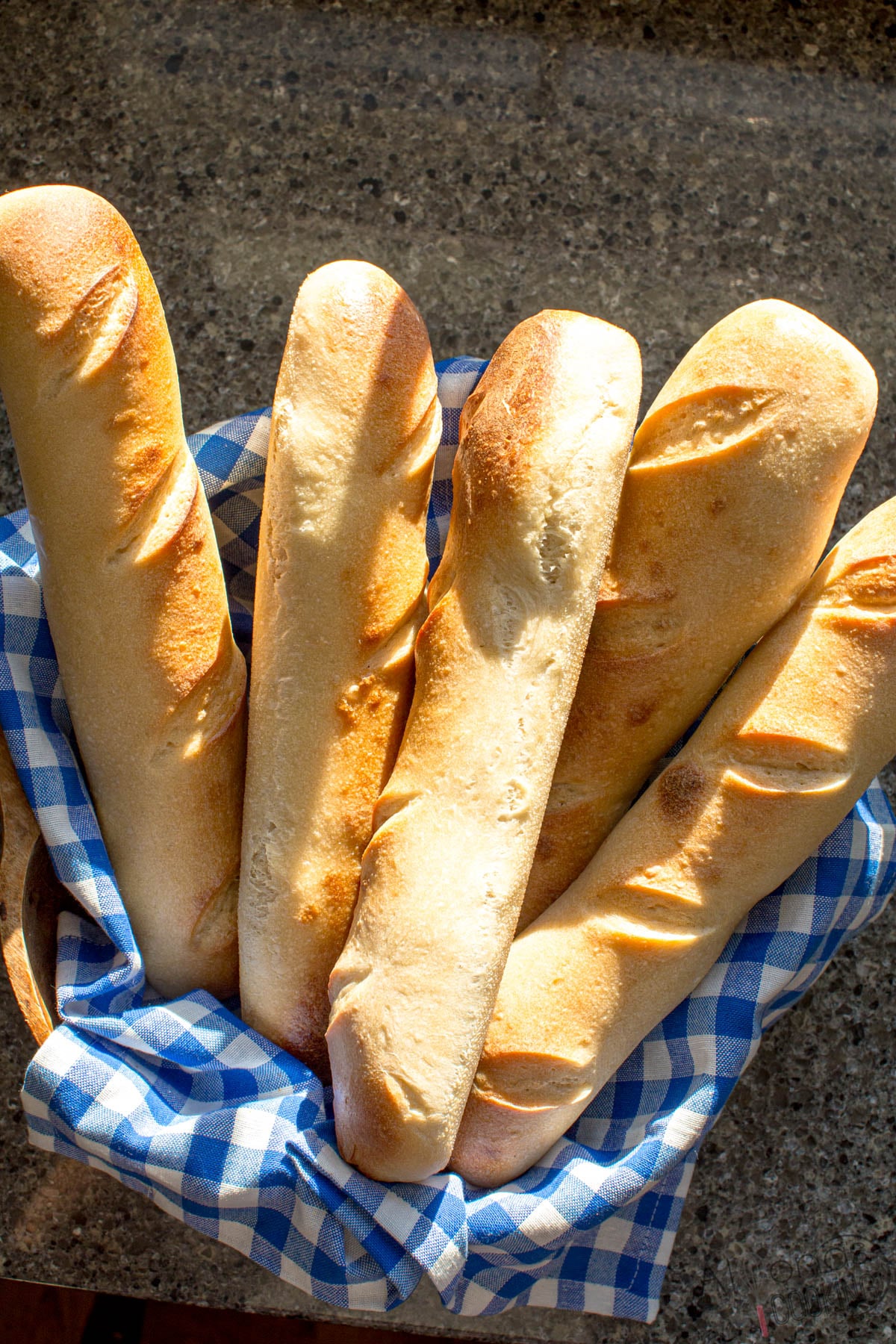

Store-bought French baguettes are convenient, but nothing compares to the complex flavor and crackling crust of a homemade sourdough version. If you have an active sourdough starter on hand, you’re already halfway there. This recipe guides you through creating bakery-quality baguettes with that signature tangy flavor and perfectly crispy exterior that makes people think you’ve been baking professionally.
How to Make Sourdough French Baguettes
This method uses a long, cold fermentation to develop deep flavor and a light, airy crumb. Total time is approximately 24-48 hours, but most of that is hands-off.
Ingredients
- 500g bread flour (approximately 4 cups)
- 350ml water at room temperature
- 100g active sourdough starter (fed 4-8 hours prior)
- 10g sea salt
- Extra flour for dusting and shaping
Method
Mix the dough
Combine flour and water in a large mixing bowl, stirring until no dry flour remains. Let this mixture rest for 30-60 minutes (this step is called autolyse and develops gluten naturally). Add your active sourdough starter and salt, then mix thoroughly until the dough becomes a shaggy, cohesive mass.
Begin bulk fermentation
Transfer the dough to a clean bowl and cover loosely. Let it ferment at room temperature (68-72F is ideal) for 4-6 hours. During this time, perform 4-6 sets of stretch-and-folds every 30 minutes for the first 2 hours. This builds strength without kneading.
Cold retard overnight
After bulk fermentation, transfer the dough to a covered container and place it in the refrigerator for 12-24 hours. This extended cold fermentation develops flavor and makes the dough easier to shape. The cold also slows yeast activity, giving you more control over baking time.
Shape the baguettes
Remove dough from refrigerator and turn it onto a lightly floured surface. Divide into two equal pieces. Shape each piece into a long, tapered log by gently stretching and rolling, creating tension on the surface. Place each baguette seam-side up in a floured banneton basket or on parchment paper folded into a channel.
Final proof
Cover the shaped baguettes and let them proof at room temperature for 1-2 hours (or up to 4 hours if still cold from refrigeration). They should increase by about 50% in volume. Perform the poke test: press gently with your finger. The dough should slowly spring back halfway.
Preheat and score
Place a heavy baking vessel or Dutch oven inside your oven and preheat to 475F for at least 45 minutes. This traps steam, creating that signature crispy crust. Using a sharp knife or lame, score each baguette with 3-4 diagonal slashes at a 45-degree angle, about quarter-inch deep.
Bake with steam
Carefully transfer baguettes onto parchment paper into the preheated vessel. If not using a Dutch oven, place a pan of boiling water on the bottom oven rack to create steam. Bake for 25-30 minutes until deeply golden brown and the internal temperature reaches 205-210F when measured with a thermometer at the thickest part.
Cool completely
Remove baguettes from the oven and transfer to a wire rack. Resist slicing for at least one hour, as the crumb continues to set during cooling. Listen for crackling sounds as the crust finishes crisping. This is the sign of a perfectly baked sourdough baguette.
- Keep a written log of fermentation times and temperatures—sourdough responds to your specific kitchen climate, and notes help you dial in the perfect timing for your space.
- Score with confidence using a sharp blade or baker’s lame held at 45 degrees; a hesitant cut creates a ragged ear instead of the desired crispy flap.
- If your baguettes are over-proofed (they don’t spring up in the oven), reduce final proof time by 15-30 minutes on your next batch—this is the most common adjustment beginners need to make.
Equipment to Master Sourdough Baguettes
- Dutch Oven or Bread Cloche: Traps steam around the baking dough, creating the crispy, crackly crust that defines great sourdough. A 4-6 quart capacity is ideal for baguettes.
- Baker’s Lame or Scoring Knife: A sharp blade specifically designed for scoring bread. A clean, confident cut creates the characteristic ear and controls how the bread expands in the oven.
- Banneton Proofing Basket: Supports shaped dough during final proof without deflating it. The floured surface prevents sticking while the basket’s ridges hold the baguette’s shape.
- Instant-Read Thermometer: Removes guesswork from doneness. Sourdough is properly baked when the internal temperature reaches 205-210F, ensuring a set crumb and crispy crust.
Le Creuset Enameled Cast Iron Dutch Oven
Best for: Serious sourdough bakers seeking professional results
The gold standard for bread baking. This 5.5-quart Dutch oven heats evenly and retains steam perfectly, producing baguettes with exceptional crust and oven spring. The enamel coating prevents rust and requires no seasoning. Lifetime warranty and decades of proven performance make this an investment that pays dividends with every bake.
Check Current Price on Amazon →Cuisinart Chef’s Classic Enameled Cast Iron Dutch Oven
Best for: Budget-conscious bakers new to sourdough
Delivers nearly identical performance to premium brands at half the cost. This 5.5-quart oven distributes heat evenly and retains moisture effectively for excellent crust development. Enamel coating is durable and dishwasher safe. A smart entry point into Dutch oven baking without compromising on results.
Check Current Price on Amazon →Artisan Bread Makers Set with Banneton and Lame
Best for: First-time baguette bakers wanting everything in one purchase
This comprehensive kit includes an oval banneton basket, baker’s lame with protective case, dough scraper, and detailed instruction booklet. All tools are thoughtfully sized for baguette shaping and scoring. Eliminates decision paralysis by bundling exactly what you need to start. Customers consistently praise the quality and the time saved by not shopping for individual items.
Check Current Price on Amazon →Staub Ceramic Bread Baker
Best for: Bakers who want stunning oven-to-table presentation
This specialized bread vessel is designed specifically for round and oblong loaves, offering superior steam circulation and a ceramic interior that browns evenly. The lid doubles as a serving dish, making it as beautiful on the table as it is functional in the oven. Premium craftsmanship from a heritage brand trusted by professional bakers worldwide.
Check Current Price on Amazon →Start Your Sourdough Baguette Journey Today
Making sourdough French baguettes at home is entirely achievable with patience, quality ingredients, and the right equipment. The long fermentation process transforms simple flour and water into complex, tangy bread with a crackling crust that rivals your local bakery. The key is understanding that time and temperature—not complicated techniques—do most of the work. Start with one bake, keep careful notes, and adjust based on your kitchen’s specific conditions.
The investment in a good Dutch oven and scoring tool will pay dividends across hundreds of loaves. Each batch teaches you something about how your starter behaves, how your kitchen ferments dough, and what your family prefers in terms of crust thickness and crumb openness. Within a few bakes, you’ll develop an intuition that makes the entire process feel effortless. The sourdough baguette journey isn’t a destination—it’s a skill you’ll refine and enjoy for years to come.
Frequently Asked Questions
How do I know when my sourdough starter is active and ready to use?
A ready starter should double in volume within 4-8 hours of feeding, have a pleasant sour smell, and show lots of bubbles throughout. The top may have a thin brown liquid (hooch), which indicates good fermentation activity. If your starter is sluggish, feed it daily for 3-5 days at room temperature to strengthen it.
What’s the difference between autolyse and bulk fermentation?
Autolyse is a 30-60 minute rest with just flour and water—it allows the flour to fully hydrate and begins gluten development naturally. Bulk fermentation happens after adding starter and salt; it’s the main rise where flavor develops and the dough gains strength through stretch-and-folds. They work together to build both structure and taste.
Can I skip the cold retard and bake the same day?
Yes, but you’ll lose significant flavor development. If you skip the overnight cold proof, reduce bulk fermentation to 8-10 hours total and perform 6-8 sets of stretch-and-folds instead of 4-6. The baguettes will be lighter and less tangy, but still edible. Cold fermentation is what separates home bakes from bakery-quality results.
Why does my baguette crust crackle after baking?
That crackling sound means steam is escaping as the loaf cools—it’s a sign of perfect baking. The Dutch oven trapped moisture during baking, creating a humid environment that gelatinizes the exterior. As it cools, the crust sets into a crispy shell. If your crust isn’t crackling, you likely need more steam or a hotter initial bake temperature.
How should I store finished baguettes?
Keep them in a paper bag at room temperature for up to 2 days for best crust crispness. Once cut, wrap in foil to slow staling. For longer storage, wrap cooled baguettes tightly in plastic and freeze for up to 1 month. Refresh frozen baguettes by spritzing lightly with water and baking at 375F for 10-15 minutes.
As an Amazon Associate, Build & Bloom earns from qualifying purchases. We only recommend products we genuinely think are useful. Prices and availability vary; check Amazon for the latest.
Leave a Reply