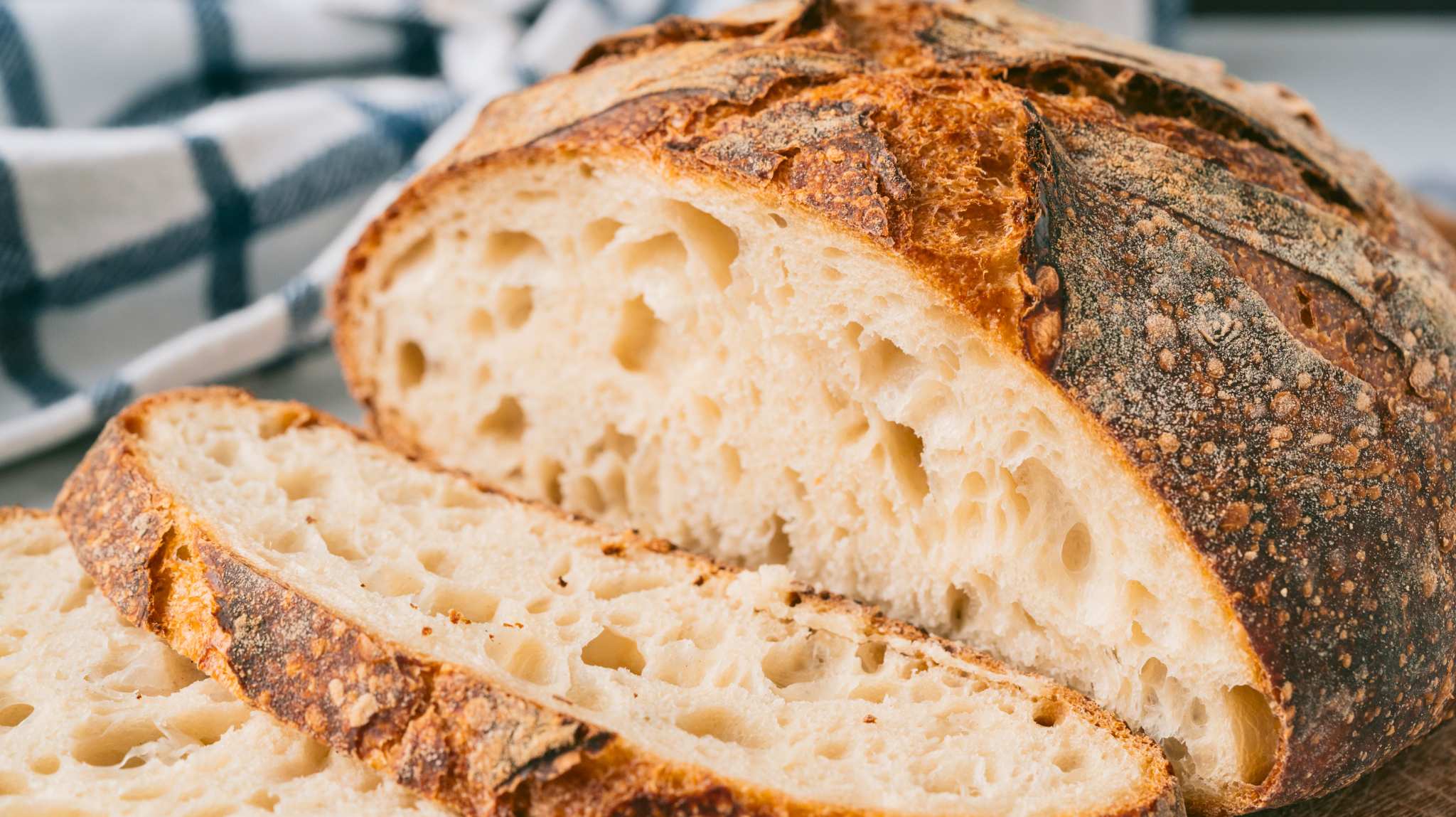

Making authentic French bread at home seems intimidating, but sourdough actually simplifies the process by developing flavor through time rather than commercial yeast. The magic happens when you bake it in a covered vessel that traps steam, creating that signature shatteringly crisp crust and open, airy crumb you can’t achieve in a regular oven. We’ll walk you through the entire process from starter to slicing.
How to Make Sourdough French Bread in a Dutch Oven
This recipe produces one beautiful rustic loaf with a caramelized exterior and open crumb structure. The long fermentation develops complex flavor while the covered baking vessel steams the dough into perfect texture.
Ingredients
- 1 cup active sourdough starter (fed 4-8 hours prior, bubbly and risen)
- 1.5 cups filtered water at room temperature
- 3.5 cups bread flour or all-purpose flour
- 1.5 teaspoons salt
Method
Mix and autolyse your dough
Combine your fed starter with water in a large bowl, stirring until mostly dissolved. Add flour and mix by hand until all dry flour is incorporated and you have a shaggy dough. Let this rest uncovered for 30-60 minutes. This rest allows the flour to fully hydrate and develops gluten naturally without extra kneading.
Add salt and perform stretch-and-folds
Sprinkle salt over the dough and incorporate it with wet hands. Over the next 2-3 hours, perform 4-5 sets of stretch-and-folds: grab one side of the dough, stretch it up and fold it over the center, rotate the bowl, and repeat from all four sides. Do this every 30-40 minutes. This builds strength without aggressive kneading.
Bulk ferment until bubbly and risen
Allow the dough to rest for the remainder of your bulk fermentation window (total 4-5 hours at room temperature, or 8-12 hours in a cooler environment). The dough should increase by 50-75% in volume and show visible bubbles on the surface. You want it puffy but not fully doubled.
Shape and transfer to banneton
Turn the dough onto a lightly floured surface. Gently pre-shape it into a round, rest for 20 minutes, then perform your final shaping by folding the edges toward the center and rolling away from you to create surface tension. Transfer seam-side up into a floured banneton basket or bowl lined with a cloth.
Cold retard overnight for flavor
Cover the banneton with plastic and refrigerate for 12-24 hours. This cold, slow fermentation develops deep flavor and makes scoring easier. The dough can be baked straight from cold or allowed to come to room temperature first depending on your schedule.
Preheat your covered baking vessel
Place a heavy covered pot (preferably enameled cast iron) in your oven and preheat to 500°F for at least 45 minutes. The vessel must be completely hot to create maximum steam when you add the cold dough. This is crucial for proper oven spring and crust development.
Score and bake covered
Carefully remove the hot pot from the oven and turn the dough directly into it seam-side up. Using a sharp blade, score the top with a single confident slash or your desired pattern. Cover with the lid and return to the oven. Bake covered at 500°F for 20 minutes to trap steam, then reduce heat to 450°F and remove the lid.
Finish baking until deeply golden
Bake uncovered for 25-35 minutes until the crust is deep golden brown and the internal temperature reaches 210°F when measured with a thermometer inserted into the center. Remove from the pot and cool completely on a wire rack for at least 1-2 hours before slicing to allow the crumb structure to set.
- Keep your sourdough starter fed and active: feed it 1:1:1 (starter:flour:water by weight) and let it double in size within 4-8 hours before baking. A weak starter produces weak bread.
- Use filtered water if possible to avoid chlorine, which can inhibit fermentation. Water temperature between 75-80°F will give you a standard fermentation timeline.
- If your dough is sticky, wet your hands instead of adding more flour—this preserves hydration and creates a better crumb structure. The dough should feel slightly tacky, not dry.
What to Look For in Dutch Oven Bread Baking Equipment
- Oven-safe design and temperature rating: Your vessel must safely handle 500°F temperatures and have an oven-safe handle and knob. Enameled cast iron is ideal as it distributes heat evenly and won’t rust like bare cast iron. Verify the manufacturer’s maximum temperature rating before purchase.
- Size and capacity: A 5-6 quart pot accommodates a standard artisan loaf with 2-3 inches of clearance. Too small and your dough will hit the lid; too large and steam disperses. A pot that’s roughly 10-11 inches in diameter works well for home bakers.
- Lid design and steam retention: A tight-fitting lid is essential for steam trapping during the initial bake phase. Domed lids work better than flat ones as they allow more rise. Avoid pots with loose lids that let steam escape prematurely.
- Heat distribution and material quality: Cast iron distributes heat far better than ceramic or stainless steel for bread baking. Quality enameled versions from reputable brands last decades and improve with use. Heavier pots (7+ pounds) typically perform better than lightweight alternatives.
Le Creuset Enameled Cast Iron Round Dutch Oven 5.5-Quart
Best for: Serious home bakers seeking professional results
The gold standard for sourdough baking, this French-made Dutch oven features superior enamel coating that won’t chip and maintains consistent heat distribution. The 5.5-quart capacity is perfect for one large loaf, and the tight-fitting lid creates ideal steam conditions. Available in multiple colors and designed to last generations. Heavier construction ensures even baking and superior crust development. The investment pays dividends with every loaf.
Check Current Price on Amazon →Tramontina Enameled Cast Iron Dutch Oven 5.5-Quart
Best for: Budget-conscious bakers wanting quality results
Tramontina delivers professional-grade enameled cast iron at a fraction of premium prices. This 5.5-quart pot performs beautifully for sourdough with even heat distribution and a secure lid. The enamel coating is durable and the color options are attractive. Perfect for bakers testing the Dutch oven method before committing to a luxury brand. Thousands of five-star reviews confirm its reliability for bread baking.
Check Current Price on Amazon →Staub Enameled Cast Iron Cocotte 5.5-Quart
Best for: Home bakers who value German engineering and aesthetics
Staub’s black matte enamel interior hides stains and develops character with use, while the exterior enamel resists discoloration. The rounded interior and slightly higher sides than competitors give dough room to rise fully. Made in France with precise manufacturing, each piece is individually inspected. The knob and handles are engineered for easy maneuvering even with oven mitts. A premium investment with unmatched performance.
Check Current Price on Amazon →Calphalon Contemporary Hard-Anodized Aluminum Dutch Oven 6-Quart
Best for: First-time sourdough bakers on a strict budget
This lightweight aluminum Dutch oven heats faster than cast iron and is significantly more affordable, making it ideal for testing the method. The hard-anodized construction resists sticking and the 6-quart capacity provides extra room. While it won’t retain heat quite like cast iron, it still produces excellent crust with proper technique. The handles stay cooler and it’s easier to maneuver. A practical entry point before upgrading to cast iron.
Check Current Price on Amazon →Final Recommendation
Making sourdough French bread in a Dutch oven is genuinely transformative. The combination of slow fermentation and trapped steam creates a crust and crumb structure that commercial bakeries charge premium prices for. Your starter does the heavy lifting over time, and the Dutch oven does the rest during baking. Even beginners see impressive results on their first try.
Invest in your Dutch oven thoughtfully—it’s the single most important tool for this recipe and will last decades with minimal care. Whether you choose the Le Creuset standard, the Tramontina value option, or any of the excellent choices above, you’re acquiring a tool that will make every loaf better. Start your first loaf today, and within 48 hours you’ll understand why sourdough bakers become obsessed with perfecting their craft.
Frequently Asked Questions
How do I know when my sourdough starter is ready to use?
A ready starter should double or triple in size within 4-8 hours of feeding and be bubbly throughout with a pleasant sour smell. If it hasn’t risen much or smells like paint thinner, feed it once or twice daily for 5-7 days until it becomes predictable and vigorous. Discard the top layer before using.
Can I use my Dutch oven for other cooking after using it for bread?
Yes, enameled Dutch ovens are versatile and work beautifully for soups, stews, braising, and slow cooking. Simply wash normally between uses. The enamel coating prevents any bread flavor from transferring to other foods. This versatility is one reason enameled cast iron is worth the investment.
What if I don’t have a banneton basket?
Use a regular mixing bowl lined with a well-floured kitchen towel or linen cloth. A ceramic or glass bowl works fine and keeps dough at the same temperature. Tuck the cloth around the dough to support it during cold fermentation. Traditional bakers used linen cloths for centuries before bannetons became common.
Why is my crust not crispy?
Insufficient steam during the first 20 minutes is usually the culprit. Make sure your Dutch oven is completely preheated to 500°F for 45 minutes, and that the lid sits snugly. Older dough (past peak fermentation) also won’t spring as much, reducing crust quality. Keep the pot covered for the full 20-minute window.
Can I bake sourdough without a Dutch oven?
You can use any covered vessel—a covered casserole dish, covered roasting pan, or even a large mixing bowl flipped over the dough (if oven-safe). The key is trapping steam. You’ll have less spectacular results than with cast iron’s even heat distribution, but you can still make good bread with any covered oven-safe container.
As an Amazon Associate, Build & Bloom earns from qualifying purchases. We only recommend products we genuinely think are useful. Prices and availability vary; check Amazon for the latest.
Leave a Reply