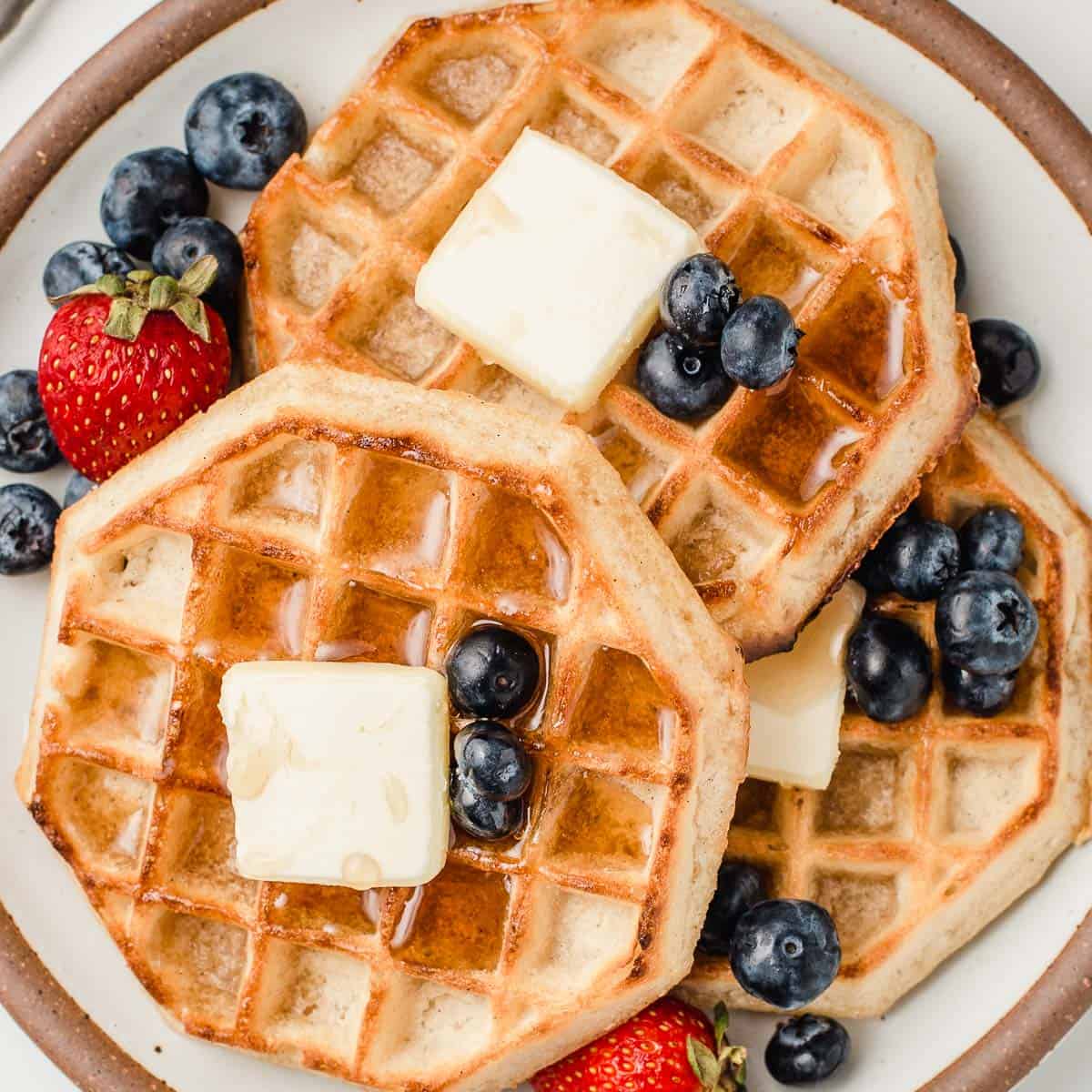

If you keep a sourdough starter on your counter, you already have the foundation for incredible pancakes and waffles that taste nothing like store-bought mixes. The natural fermentation of sourdough creates a subtly tangy flavor and lighter texture that transforms ordinary breakfast into something special–and you’ll use ingredients you probably already have in your kitchen.
How to Make Sourdough Pancakes and Waffles
Both recipes start with the same base batter and active sourdough starter, but diverge slightly depending on whether you’re cooking them on a griddle or in a waffle iron. The fermentation process happens overnight, so plan ahead.
Ingredients
- 1 cup active sourdough starter (fed and bubbly)
- 1 cup all-purpose flour
- 2 large eggs
- 3/4 cup milk or buttermilk
- 2 tablespoons melted butter, plus extra for cooking
- 1 teaspoon salt, 1/2 teaspoon baking soda, and optional vanilla extract or honey to taste
Method
Combine and rest your batter
In a mixing bowl, whisk together your active sourdough starter, flour, eggs, milk, and melted butter until just combined. The batter will be lumpy and thick–this is correct. Cover and let rest at room temperature for 8-12 hours or overnight. This fermentation step develops flavor and helps the batter rise during cooking.
Add leavening and seasonings
Just before cooking, gently fold in the salt, baking soda, and any optional flavorings like vanilla or honey. The baking soda will react with the acidic starter and create lift. Don’t overmix; a few lumps are fine and will actually result in fluffier pancakes or waffles.
Preheat your cooking surface
For pancakes, heat a griddle or skillet over medium heat and lightly butter it. For waffles, plug in your waffle iron and preheat according to the manufacturer’s instructions. Allow 3-5 minutes for the surface to reach proper temperature. A properly heated surface ensures even cooking and golden exteriors.
Cook pancakes on a griddle
Pour 1/4 cup batter onto the prepared griddle for each pancake. Cook for 2-3 minutes until edges look set and bubbles form on the surface, then flip carefully. Cook another 1-2 minutes on the second side until golden brown. Transfer to a plate and keep warm.
Cook waffles in the iron
Lightly butter the waffle iron plates and pour 3/4 cup batter into the center. Close the lid carefully and cook for 4-5 minutes until the exterior is golden and crispy. The waffle should release easily when fully cooked. Open gently to avoid steam burns.
Serve immediately or hold warm
Both pancakes and waffles taste best served hot with your favorite toppings: butter, maple syrup, fresh berries, whipped cream, or honey. If cooking a large batch, place finished pieces on a baking sheet in a 200-degree oven to keep them warm while you finish cooking the rest.
- Make sure your starter is truly active and bubbly before mixing–a sluggish starter will result in dense pancakes. Feed it 4-8 hours before using and look for visible bubbles throughout.
- Don’t skip the overnight rest. This fermentation develops the signature tangy sourdough flavor and actually improves digestibility compared to standard pancake recipes.
- Thinner batter makes fluffier pancakes; if your batter seems too thick after resting, whisk in a tablespoon of milk at a time until you reach the right consistency.
What to Look For in Pancake and Waffle Equipment
- Griddle or skillet material: Cast iron retains heat evenly and builds seasoning over time for non-stick properties, while stainless steel offers durability and easier cleanup. Non-stick surfaces work but wear down with repeated use and high heat.
- Waffle iron heating: Look for even heat distribution across plates and adjustable temperature settings. Dual indicators showing both preheated status and doneness help prevent undercooked or burnt waffles.
- Surface area and capacity: Larger griddles allow you to cook multiple pancakes simultaneously for faster batch cooking, while compact waffle irons fit in smaller kitchens but limit serving speed.
- Measurement and mixing precision: Accurate measuring cups and spoons, plus a sturdy bowl and whisk, ensure consistent batter texture and reliable results from batch to batch.
Lodge Cast Iron Skillet, 10.25 Inch
Best for: Pancake cooking with superior heat retention and durability
Lodge’s pre-seasoned cast iron skillet has been a kitchen staple for generations. The 10.25-inch size accommodates 2-3 pancakes at once, distributing heat evenly for golden-brown results every time. Cast iron’s thermal mass keeps your cooking surface at consistent temperature even when cold batter hits it. Naturally non-stick when properly maintained, and it lasts decades with minimal care.
Check Current Price on Amazon →All-Clad Ha1, Hard-Anodized Non-Stick Griddle
Best for: Home cooks wanting foolproof non-stick pancake cooking
This hard-anodized aluminum griddle features a large cooking surface that fits over two stovetop burners, plus a reliable non-stick coating that requires minimal oil. Even heat distribution prevents hot spots, and the raised edge contains splashes. Easy cleanup compared to cast iron, making it ideal for beginners who want consistent results without seasoning maintenance.
Check Current Price on Amazon →T-fal Ultimate Hard Anodized Non-Stick Griddle
Best for: Budget-conscious cooks wanting reliable non-stick performance
T-fal’s griddle delivers excellent non-stick performance at a fraction of premium prices. The hard-anodized surface resists scratching, and the griddle heats evenly across its cooking surface. While it may not match the longevity of high-end brands, it’s a solid choice for testing sourdough pancake recipes without major investment.
Check Current Price on Amazon →Breville the Smart Waffle Pro 4-Slice Waffle Maker
Best for: Waffle enthusiasts wanting precise temperature control
Breville’s waffle maker features smart temperature sensors that adjust heat throughout the cooking cycle for perfectly crispy exteriors and fluffy interiors. The 4-slice capacity lets you cook waffles for the whole family at once, and the precision thermostat means no more burnt or undercooked results. Premium construction ensures years of reliable use.
Check Current Price on Amazon →Transform Your Breakfast with Sourdough
Sourdough pancakes and waffles represent the perfect marriage of traditional fermentation and modern convenience. Your sourdough starter does the heavy lifting overnight, developing complex flavors that store-bought mixes can never replicate. By morning, you’ll have a ready-to-cook batter that turns simple ingredients into something restaurant-quality. The tangy notes from fermentation complement maple syrup, fresh berries, and whipped cream in ways that make standard pancakes taste one-dimensional by comparison.
Investing in one quality cooking tool–whether a cast iron skillet for pancakes or a reliable waffle iron–pays dividends every time you use it. Start with your next sourdough feeding, prepare the batter that evening, and wake up to pancakes and waffles your family will actually request. Once you’ve made them this way, the frozen variety will never satisfy you again. Your homestead breakfast game just leveled up.
Frequently Asked Questions
How long should I let my sourdough batter rest before cooking?
Rest the batter for 8-12 hours at room temperature, or overnight. This fermentation develops flavor and allows natural leavening to occur. You can refrigerate it after resting for up to 2 days if you need to delay cooking.
Can I make the batter ahead and freeze it?
Freezing isn’t recommended for sourdough pancake batter since the fermentation process becomes dormant. However, you can prepare the dry ingredients ahead and mix them with your starter the night before cooking for convenience.
Why are my pancakes dense and flat?
Dense pancakes usually indicate your starter wasn’t active enough when mixed, or you over-mixed the final batter. Always use a bubbly, fed starter, and fold the baking soda in gently just before cooking without stirring too much.
What’s the difference between sourdough pancakes and regular pancakes?
Sourdough pancakes use fermented starter instead of commercial leavening, creating a complex tangy flavor and naturally lighter texture. The fermentation also breaks down gluten, making them easier to digest for some people.
Can I use the same batter for both pancakes and waffles?
Yes, the base recipe works for both. Waffles benefit from slightly thicker batter (you can reduce milk by 2 tablespoons), while pancakes prefer thinner consistency. Adjust as needed based on your equipment and preferences.
As an Amazon Associate, Build & Bloom earns from qualifying purchases. We only recommend products we genuinely think are useful. Prices and availability vary; check Amazon for the latest.
Leave a Reply