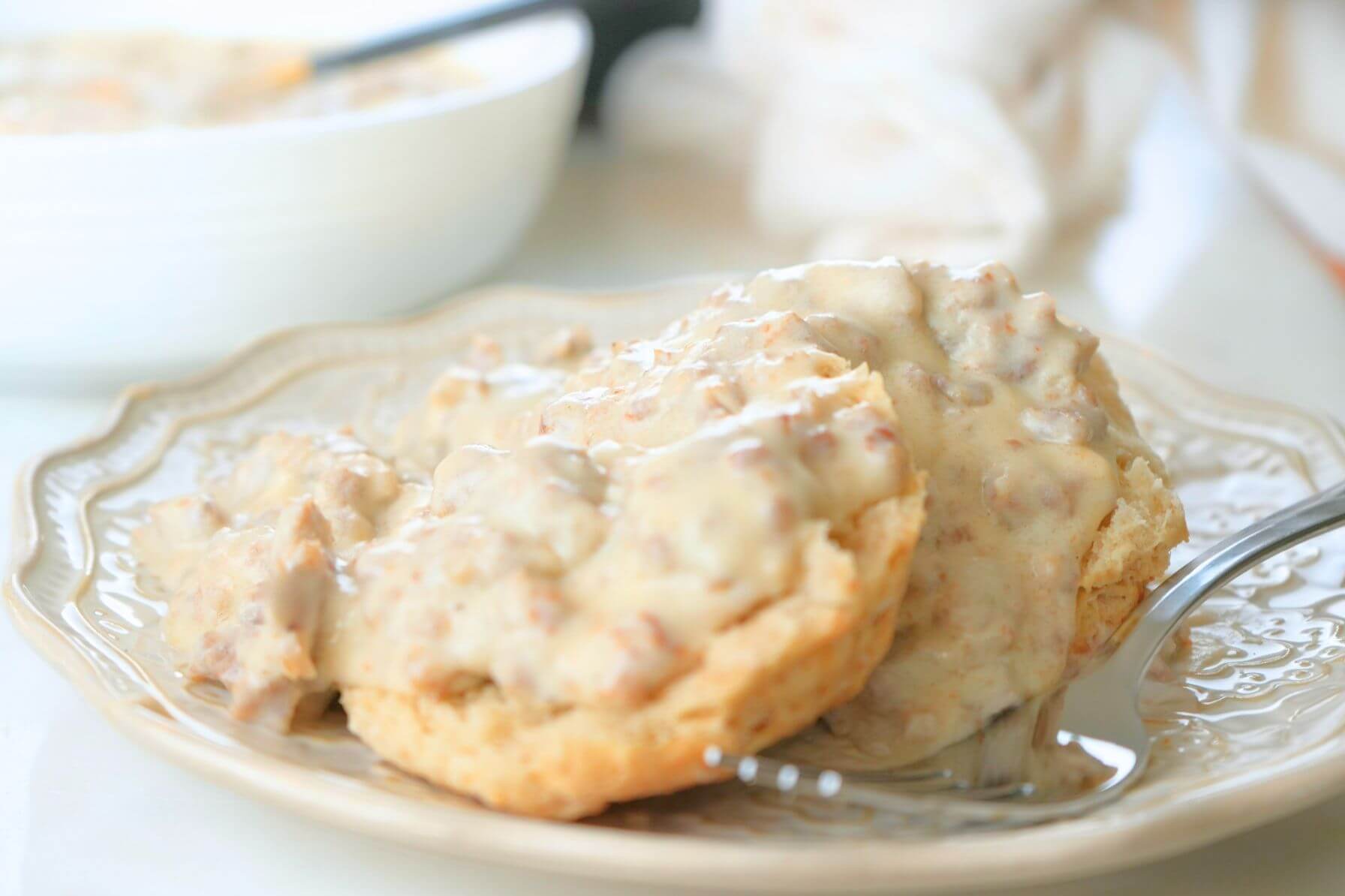

Sourdough biscuits and gravy is the ultimate Southern breakfast, but most recipes call for commercial yeast or buttermilk powder. If you have an active sourdough starter sitting on your counter, you already have everything you need to create biscuits with deep tangy flavor and incredible texture. This recipe bridges traditional sourdough baking with classic Southern comfort food, giving you crispy-edged, tender-centered biscuits that rise beautifully without any commercial leavening.
How to Make Southern Sourdough Biscuits and Gravy
This recipe yields about 8-10 biscuits with a rich sausage gravy that comes together while your biscuits bake. The sourdough starter replaces traditional leavening, creating natural rise and tangy depth.
Ingredients
- 1 cup active sourdough starter (fed 4-6 hours prior)
- 2 cups all-purpose flour, plus extra for dusting
- 6 tablespoons cold butter, cut into small cubes
- 3/4 teaspoon salt
- 1/2 teaspoon black pepper
- 1 pound breakfast sausage, 1/2 cup butter, 1/4 cup flour, 2 cups whole milk, and salt and pepper to taste for gravy
Method
Prepare Your Dough
Combine your active sourdough starter with flour, salt, and pepper in a large mixing bowl. Cut cold butter into small cubes and work them into the flour mixture with your fingertips until the texture resembles coarse breadcrumbs. The butter pieces should remain visible and distinct. This creates the layers that make biscuits flaky.
Knead Minimally
Mix the dough gently with your hands just until it comes together. Do not overwork it. The dough should be shaggy and slightly sticky. Overworking develops gluten and creates tough biscuits rather than tender ones. Stop mixing as soon as you see no dry flour streaks.
Rest and Chill
Transfer the dough to a floured work surface and let it rest for 5 minutes. Then wrap it loosely and refrigerate for at least 15 minutes. This resting period allows gluten to relax and makes the dough easier to handle while keeping the butter cold for proper layering.
Shape and Cut Biscuits
Dust your work surface with flour and gently pat the dough out to about 3/4-inch thickness. Using a sharp biscuit cutter or drinking glass, cut rounds and place them on a parchment-lined baking sheet. Do not twist the cutter; press straight down and lift. Twisting seals the edges and prevents proper rise.
Bake Until Golden
Preheat your oven to 425°F. Bake biscuits for 12-15 minutes until the tops are golden brown and they’ve risen significantly. You should see visible layers when you break one open. Remove from the oven and keep warm while you prepare the gravy.
Brown the Sausage
In a heavy skillet over medium heat, crumble and cook the breakfast sausage until fully browned, breaking it into small pieces as it cooks, about 8-10 minutes. Pour off most of the fat, leaving about 2 tablespoons in the pan along with the cooked meat.
Make the Roux and Gravy
Add butter to the sausage and pan drippings, then sprinkle flour over top. Stir constantly for 1-2 minutes to create a golden roux that coats all the meat. Gradually pour in the milk while whisking to prevent lumps. Continue cooking and stirring until the gravy thickens, about 5-7 minutes. Season with salt and pepper to taste.
Serve and Enjoy
Split the warm biscuits and ladle the creamy sausage gravy over the top. The tangy sourdough flavor pairs beautifully with the savory, rich gravy. Serve immediately while everything is still hot and the biscuits are at their fluffiest.
- Feed your sourdough starter 4-6 hours before baking so it’s at peak activity with plenty of bubbles. A sluggish starter won’t provide enough rise for proper biscuit texture.
- Keep all your ingredients and tools cold, especially the butter and the mixing bowl. Cold dough creates better separation between layers and fluffier biscuits.
- Make the gravy while the biscuits bake so everything finishes at the same time. This dish is best served immediately when the biscuits are still warm and steaming.
What to Look For in Biscuit-Baking Equipment
- Biscuit Cutter Quality: A sharp, straight-edged cutter (not twisted) creates clean cuts that allow biscuits to rise evenly. Dull cutters or those that twist compress the dough edges and prevent proper puffing in the oven.
- Mixing Bowl Material: Metal or ceramic bowls conduct temperature better than plastic and help keep your dough cool during mixing, which is essential for flaky layers. Avoid plastic mixing bowls that insulate warmth into the dough.
- Heavy-Bottomed Skillet: A quality skillet distributes heat evenly for browning sausage and making gravy without scorching. Cast iron or heavy stainless steel prevents hot spots that can burn the roux or meat.
- Measuring Accuracy: Accurate measurement of flour and starter is crucial for proper dough consistency. Digital scales provide better precision than volume measurements, which can vary based on how flour is scooped.
Lodge Cast Iron Skillet 12-Inch
Best for: Cooks who want durability and even heat distribution for both sausage browning and gravy making
The Lodge 12-inch cast iron skillet is an investment piece that will last decades. Its heavy construction distributes heat evenly, preventing hot spots that can burn your roux or sausage. The natural seasoning develops a non-stick surface over time, and it transitions seamlessly from stovetop to oven. Perfect for Southern cooking where cast iron is a tradition.
Check Current Price on Amazon →Oxo Good Grips Biscuit Cutter Set
Best for: Home bakers who want foolproof results with minimal experience
This three-piece set includes different sizes so you can experiment with biscuit dimensions. The sharp stainless steel blades cut cleanly without crushing dough, and the soft ergonomic handles make pressing down easy even for young bakers. The straight-edge design is crucial for preventing twisted cuts that inhibit rise.
Check Current Price on Amazon →Winco Stainless Steel Mixing Bowl 5-Quart
Best for: Budget-conscious bakers who need reliable performance without premium pricing
At under fifteen dollars, this stainless steel bowl is durable and keeps dough cool during mixing. The 5-quart capacity gives you plenty of room to work with biscuit dough without splashing. Stainless steel conducts temperature well, helping maintain the cool dough needed for flaky layers.
Check Current Price on Amazon →All-Clad Stainless Steel 3-Quart Saucepan
Best for: Serious home cooks who demand professional-grade cookware for gravy making
All-Clad’s bonded stainless steel construction ensures perfectly even heating for your gravy roux. The heavy bottom prevents hot spots and scorching, while the angled sides make whisking smooth and easy. This saucepan is overkill for gravy but worth the investment if you cook regularly.
Check Current Price on Amazon →Final Recommendation
Southern sourdough biscuits and gravy is a dish that rewards you for having an active sourdough starter. The tangy depth of fermented flour combined with buttery, flaky layers creates something far more interesting than standard biscuits from a can. This recipe proves that your sourdough hobby can produce breakfast magic beyond the typical loaf, and it’s faster than you’d expect at under 45 minutes total.
Start with quality equipment that supports both components of the dish: a heavy skillet for even sausage browning and gravy making, a sharp biscuit cutter for clean cuts, and a cold mixing bowl to maintain proper texture. The moment you split open your first biscuit and ladle the creamy sausage gravy over it, you’ll understand why this combination has endured as a Southern breakfast staple for generations. Make this once and it’ll become part of your regular rotation.
Frequently Asked Questions
Can I use unfed sourdough starter or one that isn’t active?
No. An inactive starter won’t provide enough rise for your biscuits to puff properly. You need a starter that’s bubbly and has doubled in size within 4-6 hours of feeding. If your starter is sluggish, feed it and let it sit at room temperature for a few hours before using.
Why are my biscuits coming out dense instead of fluffy?
This usually happens from overworking the dough (develops too much gluten), using inactive starter, or not keeping ingredients cold enough. Mix minimally, use a recently fed starter, and chill your dough and mixing bowl. Dense biscuits also result from baking at too low a temperature.
Can I make the biscuit dough the night before and bake in the morning?
Yes, you can refrigerate the cut biscuits covered overnight and bake them in the morning. The overnight rest actually improves flavor. Add 2-3 minutes to the baking time since they’ll start cold. Do not freeze the cut biscuits as sourdough biscuits don’t freeze well before baking.
What’s the difference between this and regular buttermilk biscuits?
Sourdough biscuits have a subtle tangy flavor from the fermented starter, which adds complexity without making them taste sour. The fermentation also improves digestibility. Regular buttermilk biscuits are slightly sweeter and more neutral in flavor. Both are delicious, but sourdough offers additional depth.
How do I store leftover biscuits and gravy?
Store biscuits in an airtight container at room temperature for up to 2 days, or wrap and freeze for up to a month. Keep gravy in a covered container in the refrigerator for 3-4 days. Reheat gravy gently in a saucepan with a splash of milk to restore consistency, and warm biscuits wrapped in foil in a 300°F oven.
As an Amazon Associate, Build & Bloom earns from qualifying purchases. We only recommend products we genuinely think are useful. Prices and availability vary; check Amazon for the latest.
Leave a Reply