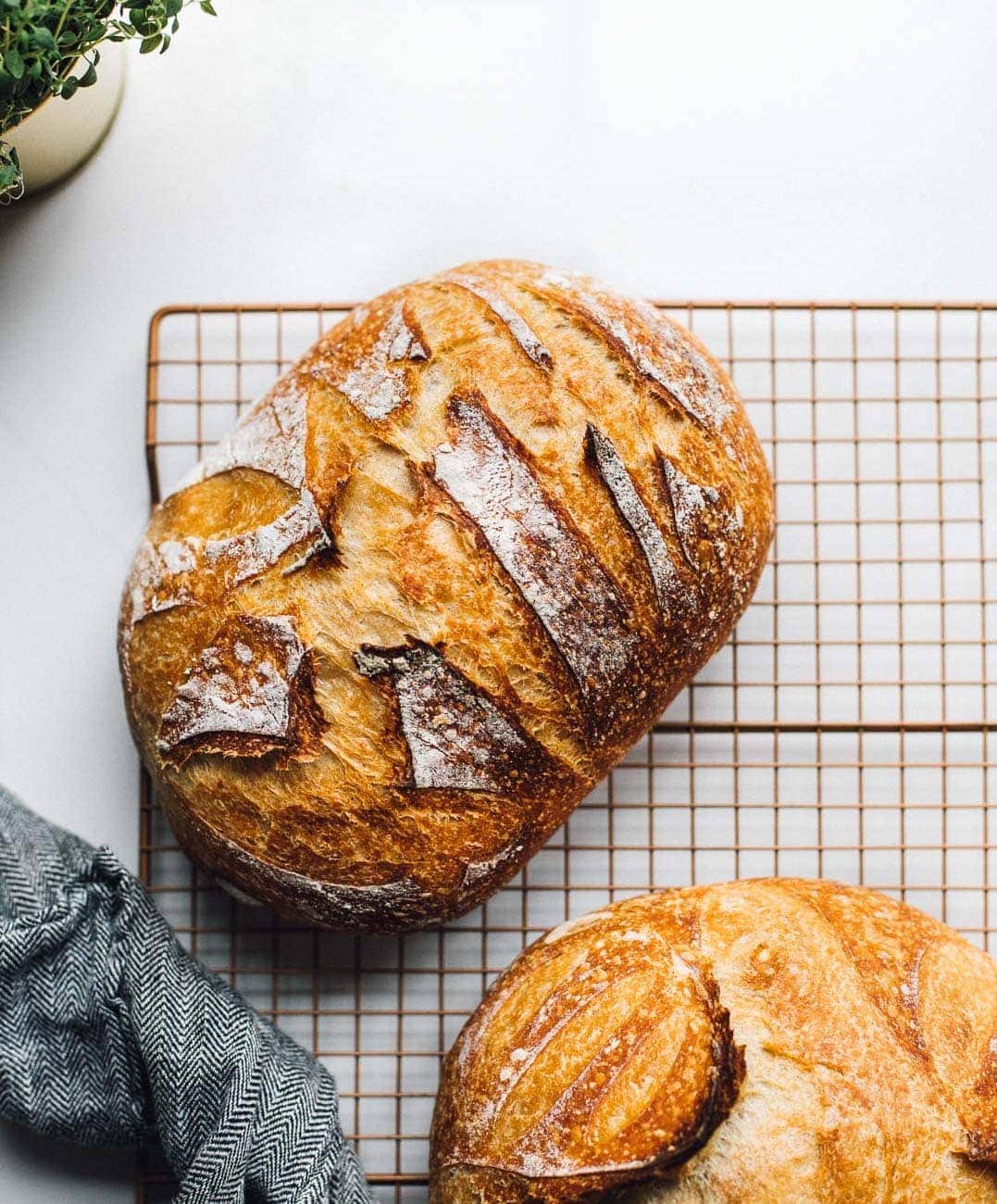

If you’ve been scrolling sourdough recipes but feel intimidated by the technique, toasted walnut and honey sourdough is the perfect bridge recipe. The walnuts add rich flavor and subtle texture that mask minor fermentation mistakes, while the honey provides gentle sweetness without overpowering the bread’s natural tang. This recipe works with any home baker’s schedule, whether you want to bake tomorrow or in three days.
How to Make Toasted Walnut and Honey Sourdough
This sourdough uses a long, cool fermentation to develop flavor naturally. The process is flexible: adjust timing based on your kitchen temperature and when you want fresh bread.
Ingredients
- 1 cup active sourdough starter (fed 4-8 hours prior, bubbly and risen)
- 3 cups bread flour or all-purpose flour
- 1.25 cups room-temperature water
- 2 teaspoons salt
- 1 cup raw walnuts, toasted and roughly chopped
- 3 tablespoons honey, divided
Method
Toast and cool your walnuts
Spread raw walnuts on a baking sheet and toast at 350°F for 8-10 minutes until fragrant and golden. Transfer to a plate to cool completely. Once cooled, roughly chop into uneven pieces—some larger chunks, some smaller bits create better texture than uniform sizes.
Mix the dough
In a large bowl, combine your active starter, water, and 2 tablespoons of honey. Stir until mostly combined. Add flour and salt, then mix by hand or with a dough hook until all dry flour is incorporated. The dough will look shaggy and stiff; this is correct. Let it rest 30 minutes.
Incorporate walnuts with stretch-and-fold
After the 30-minute rest, sprinkle your chopped walnuts and remaining 1 tablespoon of honey over the dough. Perform four sets of stretch-and-fold (grab one side of the dough, stretch it up and fold over the center, rotate the bowl, repeat) over the next 2 hours, spacing them 30 minutes apart. This develops gluten while distributing nuts evenly.
Bulk ferment overnight
After completing stretch-and-folds, cover your bowl loosely with a towel and leave at room temperature (65-72°F is ideal) for 8-16 hours. You’re looking for the dough to increase by 50-75% and show visible bubbles on the surface. In warmer kitchens, aim for 8-10 hours; in cooler kitchens, extend to 12-16 hours.
Shape your boule
Turn the puffy dough onto a lightly floured surface. Without degassing it aggressively, gently shape into a round by pulling the top edges toward the center and rotating. Place seam-side up in a floured banneton or bowl lined with a towel. This is your proofing basket.
Cold proof for flavor development
Cover your shaped dough loosely and refrigerate for 8-24 hours. This slow, cold proof is where sourdough magic happens—the long fermentation breaks down gluten and develops complex, tangy flavor. Most home bakers proof overnight (12 hours) and bake the next morning.
Preheat and score
Place a Dutch oven in your oven and preheat to 500°F for 45-60 minutes. Carefully turn your cold dough seam-side down onto parchment paper. Using a sharp blade or bread lame, make a single confident slash across the top at a 30-degree angle, about 1/4 inch deep. This controls where the bread expands.
Bake in the Dutch oven
Reduce oven to 450°F. Carefully lower your parchment with dough into the hot Dutch oven and cover with the lid. Bake covered for 20 minutes (traps steam for oven spring), then remove the lid and bake 25-30 minutes more until deep golden-brown. The bread should sound hollow when tapped on the bottom. Cool on a wire rack at least 1 hour before slicing.
- Toast walnuts the day before and store in an airtight container. Stale walnuts taste sharper and more complex than fresh—this is desirable in sourdough.
- If your kitchen is very warm (above 75°F), reduce bulk fermentation time and proof in the refrigerator earlier. Overproofed dough loses structure and won’t oven spring properly.
- Listen to your dough, not the clock. The ‘poke test’ is your friend: gently poke the proofed dough; if the indentation springs back halfway, it’s perfectly proofed and ready to score.
What to Look For in Sourdough Baking Equipment
- Dutch oven material and size: A 5-7 quart enameled cast iron Dutch oven is standard for sourdough. The heavy bottom distributes heat evenly, and the lid traps steam during the first part of baking, creating the coveted crispy crust. Lighter pots won’t hold temperature as effectively.
- Banneton proofing basket design: Look for a banneton with a tight spiral or ring pattern that holds the dough’s shape securely during cold proof. Fabric should be sturdy cane or linen, not loose cotton. A 9-10 inch round basket accommodates a standard 1.5-pound loaf.
- Bread lame sharpness and safety: A bread lame (scoring tool) needs a razor-sharp blade to create a clean slash that guides oven spring. Choose one with a protective guard or magnetic closure to avoid accidental cuts. Single-use disposable blades are affordable and always sharp.
- Kitchen scale accuracy: Sourdough success depends on accurate flour and water ratios. An electronic scale reading to 0.1 ounce (1-2 grams) is essential. Larger platforms accommodate mixing bowls, and battery-powered models offer flexibility in kitchen placement.
Staub 5.5-Quart Round Cocotte Dutch Oven
Best for: Serious sourdough bakers seeking durability and performance
Staub’s French enameled cast iron distributes heat with exceptional evenness, crucial for preventing dark spots on your crust. The self-basting lid reduces steam loss slightly, requiring careful timing but rewarding bakers with incredible crust development. Available in multiple colors; black interior shows bread detail. Heavy construction (heavier than Lodge) retains heat brilliantly, making it the choice of professional bakers.
Check Current Price on Amazon →Lodge 6-Quart Enameled Cast Iron Dutch Oven
Best for: Budget-conscious home bakers starting their sourdough journey
Lodge delivers sourdough-ready performance at half the price of premium brands. The 6-quart size accommodates large loaves and is forgiving for beginners. Enamel coating is durable, though the lighter interior can make it harder to judge crust color. Heat retention is solid for the price point, making it an excellent gateway into Dutch oven baking.
Check Current Price on Amazon →Le Creuset 5.3-Quart Round French Oven
Best for: Collectors and bakers who use the Dutch oven for both bread and cooking
Le Creuset is the luxury standard in enameled cast iron. Exceptional heat distribution, a dark interior for visibility, and 50-year warranty reflect the investment. While premium-priced, it’s designed as a kitchen lifetime piece. The slightly smaller 5.3-quart size is perfect for artisan loaves without being oversized for other kitchen tasks.
Check Current Price on Amazon →Tramontina 6.5-Quart Enameled Cast Iron Dutch Oven
Best for: First-time sourdough bakers with tight budgets
Tramontina combines affordability with reliability. The larger 6.5-quart capacity gives margin for error, and the cream interior makes monitoring crust color straightforward. Heat retention is adequate for sourdough scoring and baking, though not quite at premium levels. Includes a tight-fitting lid that holds steam effectively during covered baking.
Check Current Price on Amazon →Your First Loaf Starts Now
Toasted walnut and honey sourdough is forgiving, flexible, and absolutely achievable in a home kitchen. The combination of nutty texture and subtle sweetness makes it nearly impossible to fail—even slightly overproofed or underproofed loaves taste remarkable. The most important step is feeding your starter consistently and reading your dough instead of watching the clock. Once you master this recipe, you’ll have the foundation for dozens of flavor variations: rosemary and olive oil, cinnamon and raisins, seeds and sea salt.
The equipment matters less than you think. A Dutch oven, banneton, and bread lame are all readily available and affordable enough to justify as kitchen staples. Your first loaf might not have magazine-perfect scoring or a perfectly caramelized crust, but it will be delicious—and homemade sourdough, warm from the oven with real butter, tastes like accomplishment. Start this weekend, proof your first loaf overnight, and bite into fresh artisan bread tomorrow morning. Your breakfast table will never be the same.
Frequently Asked Questions
What if my starter isn’t bubbly and active when I’m ready to bake?
Your starter needs one more feeding cycle. Mix it with fresh flour and water, wait 4-8 hours at room temperature until visibly bubbly, then use. An inactive starter will produce dense, gummy bread. Set a phone reminder to feed your starter regularly—daily or every other day depending on room temperature.
Can I skip the cold proof and bake the same day?
Yes, but you’ll sacrifice flavor complexity. If room temperature is above 72°F, you can shorten fermentation to 6-8 hours total, shape, and bake after 2-4 hours of room-temperature proofing. The bread will taste fresher and less sour, and the crumb may be slightly less open. Cold proofing is where sourdough develops its distinctive tang.
My Dutch oven doesn’t have a tight lid—can I use foil instead?
Foil works but isn’t ideal. It won’t seal steam as effectively as a fitted lid, which may result in less dramatic oven spring and a slightly less crispy crust. Layer two pieces of foil tightly over the top. Most home bakers find a proper Dutch oven lid worth the investment after their first failed bake.
How do I know if my dough is overproofed?
Overproofed dough pokes easily without springing back, appears flat and slack, and may collapse when scored. It looks deflated and glossy. Underproofed dough feels tight and springs back immediately after poking. Practice the poke test on each bake to develop instinct—halfway spring-back is the sweet spot.
What’s the difference between bread flour and all-purpose flour in this recipe?
Bread flour has higher protein content (12-14%) which develops stronger gluten, resulting in a chewier crumb and better oven spring. All-purpose flour (10-12%) produces a slightly more tender, fine crumb. Both work for sourdough; bread flour is more forgiving for beginners and creates a more open, airy structure.
As an Amazon Associate, Build & Bloom earns from qualifying purchases. We only recommend products we genuinely think are useful. Prices and availability vary; check Amazon for the latest.
Leave a Reply