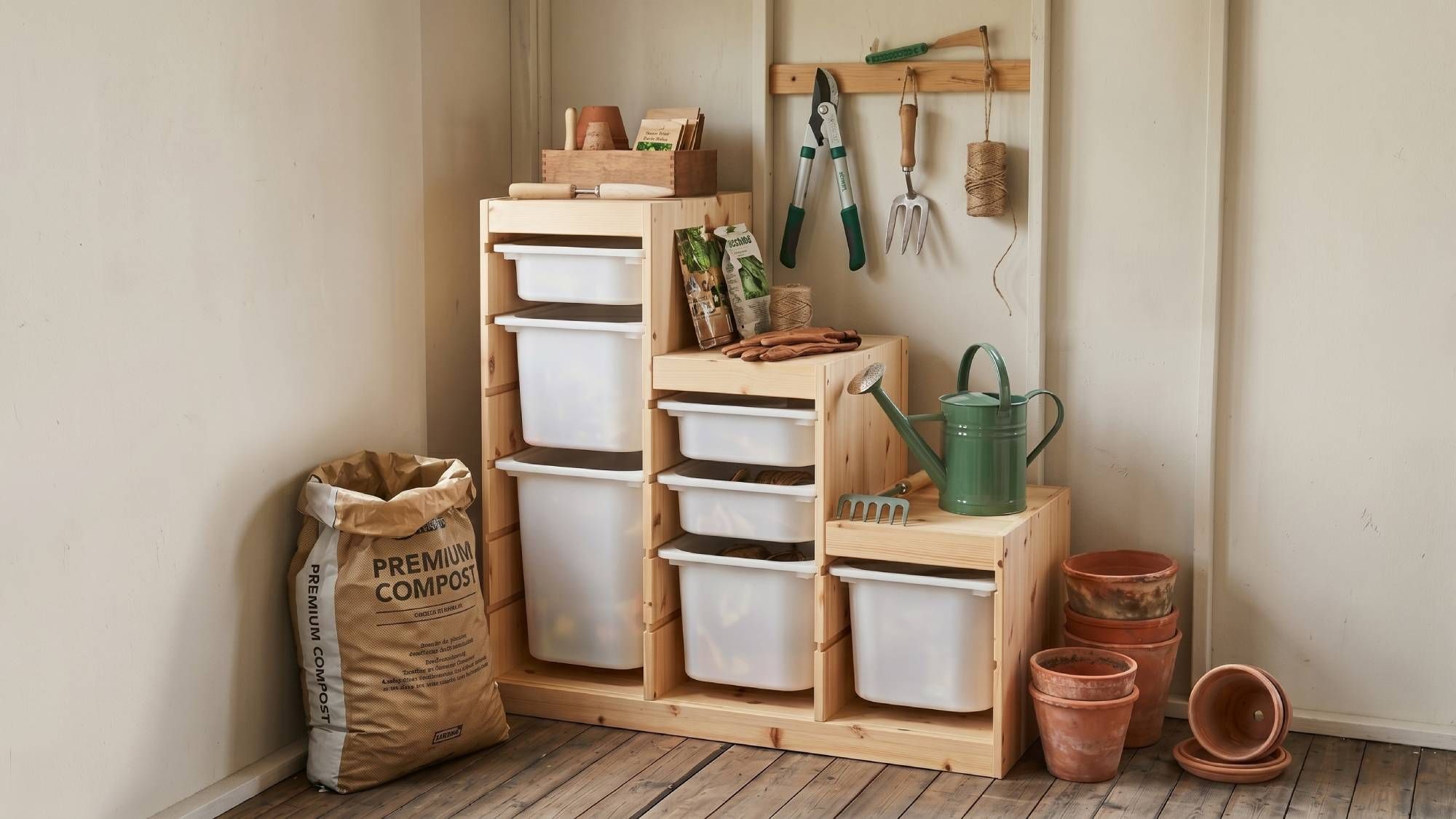

A cluttered garden shed wastes time and money—you can’t find tools when you need them, and duplicate purchases pile up. Whether you’re storing hand tools, pots, seeds, or seasonal equipment, the right organizational system makes the difference between chaos and efficiency. Using modular storage units from IKEA gives you flexibility to customize your shed layout without breaking the bank, and you can expand or adjust the system as your gardening hobby grows.
How to Organize Your Garden Shed with Modular Storage
This guide walks you through assessing your current setup, selecting appropriate containers, and installing them strategically to maximize every inch of your shed.
What You Will Need
- Measuring tape or ruler to assess shed dimensions and available wall space
- Modular storage containers (stackable, weather-resistant plastic units)
- Wall-mounted shelving or rail systems for vertical storage
- Anchors and fasteners appropriate for your shed walls (concrete, wood, or metal)
- Labels and a marker for identifying container contents
- Hand drill and drill bits if installing wall anchors
Steps
Measure and Map Your Space
Start by measuring your shed’s interior length, width, and height. Note the location of windows, doors, and existing shelves. Draw a simple diagram on paper showing wall space, floor area, and any obstacles. This map prevents purchasing the wrong-sized containers and helps you visualize the final layout before you buy anything.
Sort and Categorize Your Tools and Supplies
Remove everything from your shed and sort items into categories: hand tools, power tools, pots and planters, seeds and soil, seasonal items, and safety equipment. This process reveals what you actually own, eliminates duplicates and broken items, and shows you exactly what storage capacity you need. Keep this inventory list handy when shopping for containers.
Select Appropriately-Sized Containers
Choose modular storage containers that fit your shed’s dimensions and match your tool categories. Prioritize stackable, durable units with secure lids to protect contents from moisture and pests. Smaller containers work well for seeds and small hardware, while larger units accommodate pots and long-handled tools. Opt for translucent containers so you can see contents without opening them.
Install Wall-Mounted Shelving First
Mount shelves or rail systems on your shed walls before placing floor-level containers. Use a level to ensure shelves are perfectly straight, and position anchors into wall studs for maximum support. Wall-mounted storage frees up valuable floor space, improves ventilation underneath, and makes items easier to reach. Leave 18-24 inches of clearance above shelves for comfortable access.
Arrange Containers by Frequency of Use
Place containers with items you use most often at eye level and within arm’s reach. Store seasonal items on higher shelves or the back of lower shelves. Heavy tools belong on lower, sturdy shelves to prevent accidents. Keep lightweight containers at the top. This arrangement minimizes bending and stretching during your regular gardening tasks.
Create and Apply Labels
Use waterproof labels or a permanent marker to identify every container’s contents. Include what’s inside and, if helpful, the quantity. Clear labeling saves time when you’re looking for something specific and prevents family members from unknowingly misplacing tools. Update labels when you reorganize or change container contents.
Add Drawer Dividers or Small Organizers for Loose Items
Inside larger containers, use drawer dividers, small bins, or repurposed boxes to organize loose items like seeds, small hardware, plant labels, or twine. This prevents the ‘rummaging’ problem where you have to dump an entire container to find one item. Dividers also protect delicate items from getting crushed under heavier supplies.
Create a Maintenance Schedule
Set a quarterly review to check for items that need restocking, remove broken or unused tools, and adjust the system based on seasonal gardening changes. A brief 15-minute maintenance session prevents the shed from sliding back into chaos. Consider adding a checklist near your shed entrance to track when supplies run low.
- Choose transparent or translucent storage containers instead of opaque ones—you’ll instantly see contents and inventory levels without opening every container.
- Install a pegboard or wall-mounted tool rail near your work area for frequently-used hand tools and gloves, keeping them separate from general storage containers.
- Keep a simple inventory list posted inside your shed door noting what items are stored where and their quantities—this prevents duplicate purchases and saves frustration.
What to Look For in Garden Shed Storage Solutions
- Material Durability and Weather Resistance: Choose storage containers made from UV-resistant, reinforced plastic that won’t crack in freezing temperatures or warp under sun exposure. Your shed environment is harsher than indoor storage, so invest in weather-tested materials rather than standard household organizers that degrade quickly.
- Stackability and Space Efficiency: Look for containers with reinforced lids and flat-stacking design so you can safely stack multiple units vertically. This maximizes limited floor space and allows you to utilize shelf space efficiently. Confirm that stacked containers won’t tip or collapse under their own weight.
- Accessibility and Visibility: Prefer translucent or semi-transparent containers over completely opaque ones. You should be able to see contents at a glance, identify when items need restocking, and find specific tools without opening every container. Clear visibility reduces frustration and saves time during gardening projects.
- Modular Design and Flexibility: Select storage systems with adjustable shelves, removable dividers, or modular components that adapt as your gardening needs change. This flexibility lets you expand storage without replacing your entire system, making the investment more sustainable and cost-effective over several years.
IKEA TROFAST Storage System with Shelving Unit
Best for: Complete garden shed organization on a budget
The TROFAST system features sturdy shelving frames paired with stackable, weatherproof storage boxes in various sizes. Available in multiple colors and configurations, it combines solid construction with the flexibility to mix and match components. The boxes feature secure lids and handle grips, making it easy to pull items from shelves. This modular design adapts to your specific shed layout and tool categories, making it the most versatile choice for comprehensive garden storage.
Check Current Price on Amazon →Rubbermaid Roughneck Storage Containers (Set of 3)
Best for: Budget-conscious gardeners needing durable basics
These heavy-duty plastic containers offer excellent durability at an affordable price point. The tight-sealing latches protect contents from moisture and pests while remaining easy to open. The dark tint provides some UV protection without complete opacity. At this price, you can purchase multiple sets to create comprehensive organization without major expense. Perfect for gardeners who want functional storage without investing in premium systems.
Check Current Price on Amazon →Suncast Wall-Mounted Garden Tool Organizer Rack
Best for: Hand tools and frequently-used small items
This wall-mounted rack system includes adjustable hooks and clips designed specifically for hanging garden tools, hoses, and small equipment. The heavy-duty plastic withstands outdoor conditions while the modular hook system accommodates various tool sizes. Mounting hardware is included, and installation takes minutes. It pairs perfectly with containerized storage by keeping your most-used tools immediately accessible without taking up shelf or floor space.
Check Current Price on Amazon →Keter XXL Resin Outdoor Storage Cabinet with Shelves
Best for: High-end organization for extensive tool collections
This large, lockable cabinet combines the benefits of enclosed storage with internal shelving and organization. The UV-resistant resin construction withstands extreme weather while the weatherproof design keeps contents completely protected from moisture. The spacious interior accommodates bulky tools, power equipment, and large quantities of supplies. Although pricier than modular systems, its durability and ability to protect high-value tools makes it ideal for serious gardeners with significant collections.
Check Current Price on Amazon →Start Your Shed Transformation Today
A well-organized garden shed transforms your entire gardening experience. Instead of wasting time searching for tools or repurchasing supplies you forgot you had, you’ll spend more time actually gardening. The IKEA TROFAST system offers the best balance of affordability, durability, and flexibility for most gardeners, but your specific choice depends on your shed’s size, your budget, and how many tools you need to store. Whatever system you choose, the key is starting with a clear inventory and a simple layout plan.
Remember that shed organization isn’t a one-time project—it’s an evolving system that adapts as your gardening interests grow. By investing just a few hours in initial setup and dedicating 15 minutes quarterly to maintenance, you’ll maintain a functional, efficient space for years. Your future self will thank you every time you instantly find the tool you need without searching through clutter.
Frequently Asked Questions
How do I know what size containers to buy for my shed?
Measure your shed’s dimensions and map wall space first, then categorize your tools to estimate storage needs. Small containers (10-20L) work for seeds and hardware, medium (30-50L) for pots and soil, and large (70L+) for bulk items. Start with fewer, larger containers rather than many small ones—they’re easier to manage and stack.
Can I use regular plastic storage containers in an unheated shed?
Regular plastic containers become brittle in freezing temperatures and may crack under strain. Choose UV-resistant, cold-weather-rated containers specifically designed for outdoor use. They cost slightly more but last significantly longer and better protect your gardening investments.
What’s the best way to prevent moisture damage inside storage containers?
Use containers with secure, latching lids and ensure good air circulation in your shed with vents or periodic door opening. Add moisture-absorbing packets or containers inside larger units for extra protection. Never seal items that are damp before storing—allow them to dry completely first.
How often should I reorganize my shed storage?
A quick 15-minute inventory check each season (spring, summer, fall, winter) prevents clutter buildup. After major gardening projects, spend 30 minutes returning items to their designated containers. This minimal maintenance effort keeps your system functioning smoothly year-round.
Should I store everything in containers or keep some items on open shelves?
Store most items in sealed containers for weather protection and pest prevention. Use open shelves for items you access very frequently (like empty pots during planting season) or tools stored on wall-mounted racks. The combination of sealed storage and selective open access provides both protection and convenience.
As an Amazon Associate, Build & Bloom earns from qualifying purchases. We only recommend products we genuinely think are useful. Prices and availability vary; check Amazon for the latest.
Leave a Reply